Showing posts with label movement. Show all posts

Thursday, February 25, 2021

Movement IS Medicine. Reasons to Keep Active.

There is no doubt that the COVID-19 pandemic has disrupted our regular routines. For many of us, it’s changed how we spend our free time, where we work, and for some, it put exercise and movement in general at the bottom of our list of priorities. We understand your struggles and how important it is to stay active during these uncertain times, especially now that wintertime is upon us!

Did you know that regular physical activity is vital for staying healthy and optimistic? It represents a cornerstone in the primary prevention of at least 35 chronic conditions.

Compared to sitting around most of the time, moderate-intensity movement is associated with better immune function.

Regular exercise can also help reduce stress and anxiety (which many of us have been experiencing during this pandemic).

So, don’t sit all day!

Whether you’re sitting at work or working from home, there are easy ways to sneak activity into your daily routine.

For example: if working from home, get up and stretch every 20-30 minutes and consider taking a lap around your neighbourhood during lunchtime.

If watching TV, get up during every commercial (or periodically) and do an active chore like taking out the garbage. You will feel much more productive after just one show!

Simply put, movement is essential to your health and wellbeing!


Below are a few more important reasons for you to keep moving.

1) Low Back Pain Relief

Low back pain is one of the most common musculoskeletal complaints affecting 60–80% of all adults at least once during their lifetime.

Exercise, especially core strengthening, is very useful in improving the function of your back.

2) Bone Health Improvement

Studies have shown that aerobic and resistance exercise consistently improves the daily functional ability of patients with rheumatoid arthritis and osteoarthritis.

Current evidence indicates that exercise can increase bone density and decrease falls and associated fractures in the elderly.

3) Mental Health Improvement

Feeling anxious, stressed or moody because of social isolation? Physical exercise positively affects the long-term management of psychological symptoms, including depression, anxiety, and chronic stress!

4) Diabetes (type 1 and 2) Management

Researchers worldwide have found that regular exercise, along with dietary changes, can help manage diabetes types 1 and 2.

5) Cardiovascular Disease Prevention

Studies have shown that exercise lessens your risk of developing heart disease because it helps reduce the amount of fat and cholesterol in the body (both play a role in damaging your arteries).

There is evidence that aerobic exercise in patients with stroke positively affects walking speed and function.

6) Obesity Prevention

Physical training reduces fat mass and counteracts muscle mass loss during dieting.

Did you know that muscle tissue burns calories even when you’re at rest?

Strong evidence exists that physical activity is essential for maintaining body weight after weight loss.


Don’t let this pandemic slow you down. Make movement a part of your daily routine!

Chiropractors work with patients to provide the right type of exercises to prevent and treat musculoskeletal conditions.

Need some inspiration on easy exercises you can do at home? Contact us to schedule an appointment with one of our chiropractors set up an exercise plan.


#newhamburgchiropractic #newhamburgmassage #newhamburgphysiotherapy #newhamburgwellness #chiropractic #massage #physiotherapy #rehabilitativeexercise #movement #exercise #activeliving #physicalactivity #wecanhelp #recordreaderaward2020 #newpatientswelcome #newhamburg #wilmot

Saturday, March 18, 2017

Air Travel Comfort Tips

By Dr. John A. Papa, DC, FCCPOR(C)

Comfort is not usually the first word that comes to mind when someone mentions flying.  Sitting cramped in a small space for a long plane ride can also lead to muscle and joint pain.  Here are some helpful tips for a more enjoyable voyage.
 
Choose the Correct Seat - Some airlines fill the plane from front to back, so ask for a seat in the back row to increase your chances of having an empty seat next to you.  If the arm rests lift up, you might even be able to lie down.  Aisle and emergency exit seats maximize leg room and are less claustrophobic.  If you are susceptible to motion sickness, request a seat over the wings and try to schedule flights on larger airplanes.
 
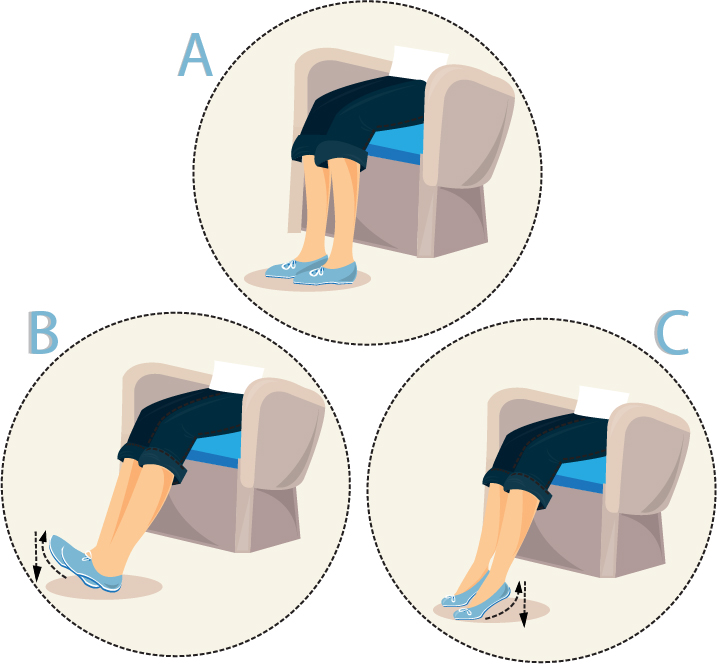
Keep Moving - Moving around is good for your circulation and helps to prevent swollen feet and ankles.  Wear loose clothing and walk about the cabin periodically every 60 to 90 minutes.  Wear shoes you can slip off easily.  Every so often, draw circles with your toes and contract your calves to help prevent blood from pooling in your legs.  Tapping your feet can also help increase circulation and reduce the chance of muscle cramping.
 
Stretch it out - Try not to place anything under the seat in front of you so you can stretch your legs out.  Quick and easy stretches also include standing up and raising your arms above your head, rotating your shoulders back and forth, and moving your head side to side.
 
Keep Good Posture While Seated - Position your lower back against the back of the chair to obtain the greatest amount of support for your spine.  A rolled sweater or blanket can also be used for added support.  Make sure that your weight is evenly distributed on your seat, your shoulders are not rounding forward, and you are not slouching.  Support your neck and head with a pillow if necessary and avoid awkward positions if trying to rest or sleep.  Try not to stay in one position for a long period of time.
 
Additional Tips
 
·        Eat Right - Eat a light, non-fatty meal just before you leave for the airport.  This can make handling turbulence a little easier.
 
·        Handling Pressure - Chewing gum, yawning or sucking on hard candies can help to relieve the pressure that builds up in your ears as the airplane ascends and descends.  This is not recommended for toddlers.  For young children, sipping a drink may help.
 
·        Prevent Dehydration - The air in most airplanes can dry out your skin and cause eye and nasal dryness.  Take a moisturizer with you for your skin and wear glasses instead of contact lenses to prevent eye dryness.  Drink enough water and steer clear of caffeine and alcohol as they further dehydrate you.  Alcohol can also interfere with your ability to sleep.
 
In the event that you suffer from ongoing muscle and joint pain following your trip, you should contact a licensed health professional.  For more information, visit www.nhwc.ca.  The author credits the CCA in the preparation of this educational information for use by its members and the public. 
 
This article is a basic summary for educational purposes only.  It is not intended, and should not be considered, as a replacement for consultation, diagnosis or treatment by a duly licensed health practitioner.

Monday, February 13, 2017

Managing Muscle & Joint Pain While Travelling

By Dr. R. Greg Lusk, DC

Along with the weather, winter get-away travel plans are a common topic of conversation this time of year while making small talk with clients.  Upcoming travel is also a driving force for some to have a painful complaint checked out as they are dreading the travel process ahead and are hopeful that the pain can be lessened so they can enjoy the vacation as originally planned.  Even for those that book an initial appointment a mere few days before departure, which doesn't allow much time for treatment to yield results, learning some key things to keep in mind or do while travelling can empower them to manage their symptoms independently.

Let's start with luggage as managing a heavy suitcase can be difficult even when you're not in pain.  Try to be restrictive in what you pack to lessen the overall weight and consider multiple bags versus a single large and heavy one if you cannot pack light.  Use wheels and pull handles if available.  Lift luggage with a straight back, bend at your hips and knees, and avoid twisting through the spine.  Lifting in stages can also help avoid excessive strain.  For example, when lifting a bag into an overhead bin, it can first be lifted to the top of the seat and then into the bin in a separate action. Similarly, loading a suitcase in or out of the trunk can be broken into steps, such that you lift the bag onto the bumper or edge of the trunk and then into the actual trunk.

Prolonged sitting, while either waiting in a terminal or in a mode of transportation (e.g. car, train, plane, etc.) is a reality of travelling that can lead to pain and stiffness throughout the body.  The seats often don't provide much support to the low back or neck so you may need to bring or create your own.  You could purchase a lumbar support cushion, use a bunched-up sweater, or roll up a blanket or towel to put in the small of your back.  With respect to your neck, using a travel pillow that fits around your neck will decrease your risk of discomfort while resting or sleeping in a seated position.  Hips and knees can also get quite stiff with extended time spent sitting, particularly in crammed airline seats where you cannot stretch out, and especially if you have pain or arthritis in those joints.  If possible, stand up regularly, every 30-60 minutes, to stretch out and walk around.

In general, moving as much as possible is recommended but even short durations of 10-15 seconds are better than nothing.  Even simple exercises performed while sitting can be quite helpful.  For example, you can raise your heels up and down while keeping your toes on the ground and then lift and lower your toes while keeping your heels down.  You can also tighten and relax the muscles in your legs and if space permits straighten and bend your knees.  The motion will limber you up and promote blood circulation to your tissues.  The improved blood flow also decreases your risk of developing a blood clot in your legs, known as a Deep Vein Thrombosis, which can occur due to prolonged sitting or inactivity and is a significant health concern.

Wearing loose fitting clothing to allow easy movement and staying well hydrated are other suggestions to minimize muscle aches and maximize comfort when travelling.  This article is for general information purposes only and is not to be taken as professional medical advice.

Monday, December 19, 2016

Keeping a Healthy Spine During Holiday Travels

Canadian Chiropractic Association

With the holiday season nearly upon us, many people are gearing up for travels in the next few weeks to visit loved ones or to take a much needed vacation. While time with family and vacations are relaxing and a great way to regenerate energy and zest, the process of traveling itself can often take a toll on our bodies and MSK system.
 
We want you to travel safe, and keep your spine safe too! Take a look at these helpful tips before you jet off this season:
 
Taking Care of Your Posture When Traveling1
 
Carrying luggage, and long flights or road trips can place stress on the lower back which may result in back pain or other musculoskeletal (MSK) conditions. The following tips may assist in keeping your back safe from injury while traveling during the holidays and beyond.
  1. Supporting your lower back. Supporting the curve in the lower back is important. In some cases, airplane seats are worn out and no longer adequately support the lower back leading to the loss of curvature and additional tension on the structures. To avoid sitting for prolonged periods in an “unnatural” position, place a small rolled-up airline pillow, blanket or a towel or lumbar pillow to fit and support the curve of your lower back. Moreover, you may consider sitting in a slightly reclined position to relieve the stress on your spine.
  2. Sit Properly. While seated, your knees should be supported and bent at more or less a 90 degree angle. For example, if your seat is too high, consider placing your feet on something that can act as a firm footrest to keep your knees at a right angle.
  3. Move. Sitting in a static position for extended periods of time can stiffen the back muscles and cause creep in the spine. Movement is key to keeping the spine and MSK system healthy. Get up, stretch and move around every 20 to 30 minutes when possible.
  4. Use proper lifting technique. Use the entire body to turn when lifting heavy luggage. Pivot with your feet, not your back, so that your whole body moves, rather than only twisting your spine.
  5. Don’t make luggage or carry-ons too heavy. Manage what you pack to avoid being left with heavy luggage to carry and maneuver. Lifting excessive weight overhead, for example, can cause hyperextension injuries. Decrease your risk of injury by packing light .
If you’re going to be sitting on a long flight or waiting in airports on long layovers, remember to take time to move, stretch and relieve the stress from travel. Choose lightweight suitcases that are easy to wheel and a properly fitted backpack as your carry on. Making smart choices throughout your travels will help you to enjoy your vacation comfortably once you arrive.
 
1Katherine Teel, “Easy tips from Texas Back Institute to avoid Back Pain while Traveling this Holiday Season,” https://texasback.com/_docs/TBI_Holiday_Travel_Tips_Release.pdf.pdf.