Showing posts with label stretching. Show all posts

Monday, June 7, 2021

Four Easy Stretches For Golfers

Stretching before playing golf can help improve your performance and help prevent injury or pain. Here are 4 easy but effective stretches to try. 🏌️‍♀️🏌️‍♂️


1. Hip Flexor Lunge ⛳
Stand with your feet shoulder width apart. Step one foot forward into a lunge position. Keep your body upright and back straight. Bend both knees so that you feel the stretch. Do not let your forward knee pass over the ankle of your front foot. Use a golf club to keep your balance. Hold 15 seconds. Repeat twice on each side.

2. Seated Twist ⛳
Sit on a bench or golf cart with your knees together and feet flat, pointing forward. Reach across the front of your body and grasp the back of the bench or cart. You should experience a stretch in your spinal muscles. Hold 15 seconds. Repeat twice on each side.

3. Seated Forward Bend ⛳
Sit on a bench or golf cart, knees bent and feet flat. Place one ankle onto your opposite knee, and relax this leg so that your knee falls out to the side. Slowly bend forward, keeping your back straight. You may gently pull on your bent knee to generate a deeper stretch. You should feel a stretch in your buttock area. Hold 15 seconds. Repeat twice on each side.

4. Side Bending Stretch ⛳
Stand with feet shoulder width apart. Hold the golf club above your head with your arms straight. Slowly bend to one side, without rotating, until you feel a stretch along the side of your back. Hold 15 seconds. Repeat twice on each side.

If you’re experiencing pain, visit one of our Chiropractors to assess your specific needs and identify a course of action that’s right for you. 👍

#golfing #golf #stretch #outdoors #chiropractor #chiropracticcare #newhamburgchiropractic #rehabilitation #wecanhelp #2020recordreadawards #newpatientswelcome #newhamburg #wilmot

Tuesday, April 3, 2018

Plantar Fasciitis: A Common Source Of Heel Pain


By Dr. John A. Papa, DC, FCCPOR(C)

Plantar fasciitis is caused by injury to the plantar fascia, which is the tendon-like soft-tissue along the bottom of the foot that connects your heel bone to your toes.  This condition is a common source of heel pain that can be quite disabling.

Plantar fasciitis usually develops gradually, but it can also come on suddenly.  Sharp, knife-like pain on the inside-bottom part of the heel is often characteristic.  Pain and discomfort can also extend into the arch of the foot.  Heel pain tends to be worse with the first few walking steps in the morning, and after extended periods of sitting or inactivity.  If plantar fasciitis becomes severe or chronic, heel and/or arch pain will be present with all weight-bearing activities, and may result in secondary areas of discomfort in the foot, knee, hip or back due to compensatory movements.

Under normal circumstances, your plantar fascia acts like a shock-absorbing rubber band, supporting the arch of your foot.  Excessive tension and repetitive stretching can create small tears in this soft-tissue fascia, causing it to become irritated or inflamed.  This may occur with activities that require running, jumping or prolonged walking and standing.  Improper footwear can make the plantar fascia more susceptible to stretch and strain during these activities.

Faulty foot mechanics may also contribute to the development of plantar fasciitis.  Individuals with flat feet or those who excessively pronate (role feet inward) will experience added strain on their plantar fascia.  Old lower extremity injuries such as ankle sprains and fractures can increase susceptibility due to altered lower limb movements.  Being overweight is also a risk factor.  Carrying extra pounds can break down the protective fatty tissue under the heel bone, causing heel pain and putting additional mechanical load on the plantar fascia.

Self-care strategies for reducing the pain of plantar fasciitis include: ice application; rolling a tennis ball or soup can from your heel and along the arch of your foot; and gentle stretching of the achilles tendon, calf muscles, and plantar fascia.  Gel or “donut pads” placed under the affected heel(s) in shoes may also provide relief.

Plantar fasciitis that does not respond to self-care strategies may require professional treatment.  This can include electrotherapeutic or laser modalities to assist in healing, manual and soft tissue therapy to supporting structures, therapeutic taping of the heel, and specific rehabilitative  exercises for the muscles and joints of the lower leg and foot.  A custom made orthotic may also be helpful by minimizing pronation, cushioning the heel, and supporting the arch.

It is important to establish an accurate diagnosis of plantar fasciitis.   Other causes of heel pain may include stress fractures, heel fat pad syndrome, achilles tendonitis/bursitis, arthritis, gout, or nerve irritation.  If you are having difficulty with heel pain, a qualified health professional can determine the cause of your pain and prescribe appropriate therapy and rehabilitation strategies specifically for your circumstance.  For more information, visit www.nhwc.ca.

This article is a basic summary for educational purposes only.  It is not intended, and should not be considered, as a replacement for consultation, diagnosis or treatment by a duly licensed health practitioner.

Thursday, April 27, 2017

Get Set To Garden

Ontario Chiropractic Association (OCA)


Plant and Rake Without the Ache
Gardening is a great way to stay active and have fun in the sun. But many Canadians sustain injuries that can be easily prevented with a little know-how.

The right moves

Use the right moves to lighten the load on your back. Kneel, don’t bend, to plant. Change your body position often. Take frequent breaks. Alternate between light and heavy chores. Drink lots of water. And most importantly, loosen-up before you start out.
 

Warm up

Before you begin any physical activity, warming up is a key factor in preventing injury. Take a walk, even on the spot. Ten to 15 minutes should do it. Don’t forget to lift your knees and gently swing your arms.
 

Stretch before you start

To plant and rake without the ache, do each of these stretches five times. Don’t bounce, jerk or strain. Stretches should be gentle and should not cause pain.
 

Upper Body

YOUR SIDES

  1. Extend your right arm over your head.
  2. Bend to the left from the waist.
  3. Hold for 15 seconds and repeat on the other side.

YOUR ARMS AND SHOULDERS

  1. Hug yourself snugly.
  2. Slowly rotate at the waist as far as is comfortable to the left, then to the right.

YOUR BACK

  1. In a seated position, bend forward from the hips, keeping your head down.
  2. Reach for the ground.


Lower Body

YOUR THIGHS

  1. Face a wall or tree and support yourself against it with one arm.
  2. Bend your right knee and grasp your ankle or pant leg with your left hand.
  3. Hold for 15 seconds and repeat on the other side.

YOUR HAMSTRINGS

  1. Stand.
  2. Reach your hands to the sky.
  3. Then bend at the waist and reach toward your toes.
  4. Hold for 15 seconds.

Saturday, March 18, 2017

Air Travel Comfort Tips

By Dr. John A. Papa, DC, FCCPOR(C)

Comfort is not usually the first word that comes to mind when someone mentions flying.  Sitting cramped in a small space for a long plane ride can also lead to muscle and joint pain.  Here are some helpful tips for a more enjoyable voyage.
 
Choose the Correct Seat - Some airlines fill the plane from front to back, so ask for a seat in the back row to increase your chances of having an empty seat next to you.  If the arm rests lift up, you might even be able to lie down.  Aisle and emergency exit seats maximize leg room and are less claustrophobic.  If you are susceptible to motion sickness, request a seat over the wings and try to schedule flights on larger airplanes.
 
Keep Moving - Moving around is good for your circulation and helps to prevent swollen feet and ankles.  Wear loose clothing and walk about the cabin periodically every 60 to 90 minutes.  Wear shoes you can slip off easily.  Every so often, draw circles with your toes and contract your calves to help prevent blood from pooling in your legs.  Tapping your feet can also help increase circulation and reduce the chance of muscle cramping.
 
Stretch it out - Try not to place anything under the seat in front of you so you can stretch your legs out.  Quick and easy stretches also include standing up and raising your arms above your head, rotating your shoulders back and forth, and moving your head side to side.
 
Keep Good Posture While Seated - Position your lower back against the back of the chair to obtain the greatest amount of support for your spine.  A rolled sweater or blanket can also be used for added support.  Make sure that your weight is evenly distributed on your seat, your shoulders are not rounding forward, and you are not slouching.  Support your neck and head with a pillow if necessary and avoid awkward positions if trying to rest or sleep.  Try not to stay in one position for a long period of time.
 
Additional Tips
 
·        Eat Right - Eat a light, non-fatty meal just before you leave for the airport.  This can make handling turbulence a little easier.
 
·        Handling Pressure - Chewing gum, yawning or sucking on hard candies can help to relieve the pressure that builds up in your ears as the airplane ascends and descends.  This is not recommended for toddlers.  For young children, sipping a drink may help.
 
·        Prevent Dehydration - The air in most airplanes can dry out your skin and cause eye and nasal dryness.  Take a moisturizer with you for your skin and wear glasses instead of contact lenses to prevent eye dryness.  Drink enough water and steer clear of caffeine and alcohol as they further dehydrate you.  Alcohol can also interfere with your ability to sleep.
 
In the event that you suffer from ongoing muscle and joint pain following your trip, you should contact a licensed health professional.  For more information, visit www.nhwc.ca.  The author credits the CCA in the preparation of this educational information for use by its members and the public. 
 
This article is a basic summary for educational purposes only.  It is not intended, and should not be considered, as a replacement for consultation, diagnosis or treatment by a duly licensed health practitioner.

Thursday, June 9, 2016

Running Outside - Getting Started

Canadian Chiropractic Association
 
Have you finally moved your running regimen from the treadmill to outside? Summer is a great time of year to enjoy the outdoors through exercise and activity. With just your running shoes you can get out and explore new areas in your city or even better nature trails. Yet, if you are an avid indoor runner, there are likely a few adjustments to make when transitioning to the outdoors. Not surprising, the mechanics of running on a stationary treadmill will vary from running outside on an uneven surface, with various obstacles along the way. So, you will need to prepare and transition before heading out.
 
Typically, a treadmill has a motorized platform that moves under a runner’s (or walker’s) feet at a determined speed and slope. Unless programmed otherwise, the treadmill will continue to offer the same force without environmental factors like wind or terrain that often challenge runners. Also, many treadmills are padded, offering extra absorption of the forces of impact for runners.
 

We have gathered a few helpful tips to get started, and transition you to the outdoors.


Shape Magazine1 shared some great tips for runners:
  • Start slow: Running outside is more taxing on your muscles, joints and bones, and are more prone to injuries like shin splints. Start off with shorter distances on flat roads or trails, and as your endurance improves, gradually increase your mileage and hill work.
  • Maintain a constant pace: Don’t feel compelled to push yourself to run at the same pace that you would on a treadmill. Start by running at a moderate and comfortable pace that allows you to run safely, and gradually increase your speed over several weeks as your body allows.
  • Wear the appropriate footwear: Adapt your shoes to your environment. A regular running sneaker may have been ideal for the flat, predictable surface of a treadmill, but once you are outdoors, make sure the sneaker’s tread can handle the gravel, dirt roads, and slick trails. Runners should get a sneaker that supports the feet while having the appropriate sole to help maneuver and support uneven surfaces.
 
Before heading out, familiarize yourself with the route and check that it is appropriate for your level of fitness or to help you meet your goals2.
  • Pick a road or trail you are familiar with. When starting out, the last thing you want to worry about is getting lost. Before even lacing up your sneakers, do some research: ask friends where they like to run, use online running forums to find popular routes, and check to see if your park has designated trails. The more popular and visible the trail, the better.
  • Like any activity, make sure you do a proper warm-up before starting.
 
We have some great tips for proper stretching that can help prevent injury. If in doubt, talk to your chiropractor about how to improve your running, and prevent and manage injuries.

1 Shape Magazine, “Don’t make these mistakes when running. http://www.shape.com/fitness/cardio/dont-make-these-mistakes-when-running-outdoors

2 Popsugar, 4 things you need to know before running outside.   https://www.nlm.nih.gov/medlineplus/ency/article/003188.htm

Thursday, June 2, 2016

Heel Fat Pad Syndrome

By Dr. John A. Papa, DC, FCCPOR(C)

Heel Fat Pad Syndrome (HFPS) refers to damage or disruption of the fatty pad that sits under our heel bone (calcaneous).  This structure is approximately one inch thick and is made up of fatty tissue enclosed by ligamentous chambers.  The purpose of this structure is to absorb shock and cushion the heel bone.  If the fat pad is displaced or thins, then its ability to protect the heel bone from impact is decreased, which can result in heel pain.
 
HFPS is commonly misdiagnosed as plantar fasciitis.  Plantar fasciitis symptoms tend to be located towards the inner front portion of the heel and can extend into the arch of the foot, whereas symptoms of HFPS are characteristically located in the centre of the heel and described as a deep, dull ache that feels like a bruise.  Other symptoms characteristic of HFPS include central heel pain that is aggravated by prolonged periods of standing and barefoot walking on hard surfaces.  It is also possible to have both plantar fasciitis and HFPS present at the same time.
 
There are several factors that can contribute to the development of HFPS.  Trauma to the heel from high impact sports or a forceful blow to the heel from a fall can cause injury to the fat pad.  Repetitious chronic overload from activities such as running, jumping or prolonged walking and standing can also cause injury which can be exacerbated by the use of improper footwear.  It is known that the fatty heel pad breaks down as we get older which can make an individual susceptible to this condition.  Carrying extra pounds can also break down the protective fatty tissue under the heel bone.
 
Self-care strategies for reducing the pain of HFPS include: relative rest from any painful activities; ice application; and gentle stretching of the achilles tendon, and calf muscles.  Gel or “donut pads” placed under the affected heel(s) in shoes may also provide relief.  Long-term strategies may include activity modification and weight loss where applicable.
 
HFPS that does not respond to self-care strategies may require professional treatment.  This can include electrotherapeutic modalities to assist in healing, manual and soft tissue therapy to supporting structures, therapeutic taping of the heel, and specific rehabilitative  exercises for the muscles and joints of the lower leg and foot.  Supporting the foot with proper footwear and correcting faulty foot mechanics can decrease excessive strain on the fat pad.  A custom made orthotic with a deep heel cup design to cradle and cushion the fat pad may also be helpful for decreasing symptoms.
 
It is important to establish an accurate diagnosis of HFPS.  Other causes of heel pain may include stress fractures, achilles tendonitis/bursitis, arthritis, gout, or nerve irritation.  If you are having difficulty with heel pain, a qualified health professional can determine the cause of your pain and prescribe appropriate therapy and rehabilitation strategies specifically for your circumstance.  For more information, visit www.nhwc.ca.
 
This article is a basic summary for educational purposes only.  It is not intended, and should not be considered, as a replacement for consultation, diagnosis or treatment by a duly licensed health practitioner.

Monday, April 11, 2016

Tips For A Safe & Pain Free Run

Ontario Chiropractic Association


As summer approaches, sticking to an indoor exercise regime can be difficult as temperatures warm up. Running outdoors is a great way to take advantage of the weather, while keeping fit and improving energy and stress levels.

If you take your running routine outside, remember these 5 simple stretching tips to help avoid strains and pains. 
 
1. Upper Calf

Place your hands against a wall, or sturdy object in front of you. Stand feet comfortably apart, toes pointing forward. Put one leg back, keeping your heel flat on the ground. Gently bend the knee of the front leg, so your hips move forward and lean into your hands. Hold this stretch for 30 seconds.

You should feel the stretch along the back of the leg and below the knee.
 
 
2. Lower Calf
 
Keeping the same position as the upper calf stretch, shift the foot of your back leg forward until your toes are just behind the heel of the front leg. Keep both heels on the ground and lower your hips by bending both knees. Hold this stretch for 30 seconds.
 
You should feel the stretch through the back of the ankle. 
 
 
3. Front of thigh
 
Standing near a sturdy object, place hand on it for balance and use your free hand to grasp your ankle or foot. Keeping your upper body straight, pull that heel up towards your buttock and hold for 30 seconds. Repeat the stretch for the other leg. 

You should feel the stretch through the front of your leg.
 
 
4. Back of thigh
 
Place one foot up on a low surface with your toes pointing upward. Place hands on that thigh. Keeping the leg on the ground straight, bend forward from the hips. Keep your lower back flat by bringing your chest towards your knee. Hold this stretch for 30 seconds, and repeat with the other leg.
 
You should feel the stretch along the back of the front leg.
 
 
5. Hips/Buttocks
 
From the back thigh stretch position, bend your front knee so that the foot is on the edge of the surface. Placing hands on your hips, lean slightly forward over the bent leg. Keep the leg you are standing on straight. Hold this stretch for 30 seconds, and repeat with other leg.
 
You should feel the stretch in the back of the hips and buttocks.
 
 
Follow these simple tips for a safe and pain free run. Remember, don’t overstretch and never stretch a cold muscle.

Sunday, March 20, 2016

Solutions For Overcoming Poor Sitting Posture

By Dr. John A. Papa, DC, FCCPOR(C)
 
An ideal posture allows an individual to maintain an efficient, strong, and balanced position while interacting and adapting to their physical environment.  Good postural habits can help decrease abnormal and excessive physical strain on the body, thereby minimizing the chance of injury.
 
Unfortunately, modern technology has significantly influenced our daily postural habits, which has resulted in having people sit more often and for longer periods of time.  Individuals exposed to these sitting positions may adopt a poor posture that includes losing the natural hollow of the low back, rounding or slouching of the upper back and shoulders, and a forward head poking position.
 
Less than ideal posture puts cumulative compression, stretch, and shear forces on the body.  The cumulative effects of sitting are often offset by the body’s ability to compensate.  However, even in the absence of pain, these compensatory changes may begin a vicious cycle of unbalanced motion, muscle and joint stress, and secondary areas of discomfort.  As a result, the physical consequences of chronic poor posture can lead to symptoms such as muscle and joint stiffness, nerve pain, headaches, shoulder pain, neck pain, upper and lower back pain.

Listed below are some potential solutions that can minimize the chance of postural injury, specifically as it pertains to the sitting position:

1.    Pay attention to how you sit by making sure weight is evenly distributed in your seat, your shoulders are not rounding forward, and you are not slouching.  Your head should be resting on your torso and not poking forward.

2.    Take a break from sitting with 10 to 30 second stretch or posture breaks every 20 to 40 minutes.  Some activities such as computer work, talking on the phone, and business meetings can also be done while standing.

3.    The use of a properly designed workstation (i.e. adjustable chair and desk), along with ergonomic tools and assistive devices (i.e. speakerphones, foot stools, lumbar supports) can help maintain mechanically advantageous positions while working in a seated position.

4.    Avoid unnatural positions such as looking down, awkward twisting, or slouching for long periods of time as this can cause unnecessary strain.  A simple solution may be to bring your smartphone, tablet, or book closer to eye level, or adjusting your seat position to help you maintain a more natural/neutral position.

5.    Engaging in regular physical activity and exercise can keep your body strong and help overcome the effects of cumulative strain associated with poor posture.  Exercise activities can include general cardiovascular conditioning, along with postural, stretching and strengthening exercises for the neck, shoulders, upper and lower back regions.

Prolonged sitting and poor posture can undeniably cause real physical change and breakdown in the body.  If you have ongoing pain as a result of postural strain, you should contact a licensed health professional who deals in the diagnosis and treatment of these conditions.  For more information visit www.nhwc.ca.

This article is a basic summary for educational purposes only.  It is not intended, and should not be considered, as a replacement for consultation, diagnosis or treatment by a duly licensed health practitioner.

Monday, December 28, 2015

MSK Health Tips For The Holidays

Canadian Chiropractic Association

This is the season to enjoy time with family and friends, mingle at holiday parties, or to simply relax at home. It surely is a bustling time of year where we need to be mindful of our health and wellbeing. In particular, your musculoskeletal (MSK) health shouldn’t be ignored even when you’re enjoying the holiday festivities.
 
Whether you are sitting patiently, walking the streets, dancing into the night, or hauling gifts – don’t get carried away by the excitement; stay mindful of your activities.
 
Here are some strategies to help you remain healthy over the holidays1:
  1. Exercise Regularly: Regular exercise, including strengthening, can help build muscular endurance of your back muscles, enhancing function and stability. Check with a healthcare provider before starting a new exercise program or routine.
  2. Eat Well: We make hundreds of decisions about how we feed our bodies every day. Instead of striving to meet ambitious goals over the holiday, try to focus on making better decisions each day. Nourishing your body will help support tissue repair. Moreover, making healthier decisions every day can lead to better long-term health by improving bone density, muscle strength and much more.
  3. Straighten Up: To reduce the risk of developing pain or injury, ensure that you change posture frequently when sitting or standing. Check out our free app Straighten Up Canada, which can help you improve posture through unique exercises that can be practised almost anywhere.
  4. Be Mobile: Exercise and moving is important to your MSK health. Ensure that you work regularly on your mobility and flexibility as well. Warm-up and try regular stretching
  5. Avoid Prolonged Sitting: Time flies by if you are surrounded by loved ones. Consider taking breaks in between courses or drinks to stand up and move about. Invite your friends to join along.
  6. Rest: Late nights and early mornings can take a toll on your mind and body. Commit to a sleep ritual, even during the Holidays, to make sure you get quality rest. Getting enough sleep promotes the body to repair from the stress of your day. Other strategies can help you sleep more soundly, while caring for your MSK system. For example, when sleeping on your side, place a pillow between knees which will reduce the rotation of the lower back.
  7. Lift Right: Between the snow, decorations, gifts and more, the heavy loads can take a toll on your body and your back. Using proper lifting techniques will reduce the risk of injury. Try to avoid twisting while lifting. Also, when possible try to push rather than pull objects.
Don’t let pain or injury put a damper on the holidays so make sure to care of yourself this Season!
 
1 Edward Benzel, George Dohrmann, et. al. “30 Tips for Better Spine Health,” The American Academy of Spine Physicians. http://www.spinephysicians.org/cd/brochures/brochures/Brochure%2030%20Spine%20Tips%20Logo%20IBI-B3-0108-1.pdf

Wednesday, July 15, 2015

Plantar Fasciitis: A Common Source Of Heel Pain

By Dr. John A. Papa, DC, FCCPOR(C)

Plantar fasciitis is caused by injury to the plantar fascia, which is the tendon-like soft-tissue along the bottom of the foot that connects your heel bone to your toes.  This condition is a common source of heel pain that can be quite disabling.
 
Plantar fasciitis usually develops gradually, but it can also come on suddenly.  Sharp, knife-like pain on the inside-bottom part of the heel is often characteristic.  Pain and discomfort can also extend into the arch of the foot.  Heel pain tends to be worse with the first few walking steps in the morning, and after extended periods of sitting or inactivity.  If plantar fasciitis becomes severe or chronic, heel and/or arch pain will be present with all weight bearing activities, and may result in secondary areas of discomfort in the foot, knee, hip or back due to compensatory movements.
 
Under normal circumstances, your plantar fascia acts like a shock-absorbing rubber band, supporting the arch of your foot.  Excessive tension and repetitive stretching can create small tears in this soft-tissue fascia, causing it to become irritated or inflamed.  This may occur with activities that require running, jumping or prolonged walking and standing.  Improper footwear can make the plantar fascia more susceptible to stretch and strain during these activities.
 
Faulty foot mechanics may also contribute to the development of plantar fasciitis.  Individuals with flat feet or those who excessively pronate (role feet inward) will experience added strain on their plantar fascia.  Old lower extremity injuries such as ankle sprains and fractures can increase susceptibility due to altered lower limb movements.  Being overweight is also a risk factor.  Carrying extra pounds can break down the protective fatty tissue under the heel bone, causing heel pain and putting additional mechanical load on the plantar fascia.
 
Self-care strategies for reducing the pain of plantar fasciitis include: ice application; rolling a tennis ball or soup can from your heel and along the arch of your foot; and gentle stretching of the achilles tendon, calf muscles, and plantar fascia.  Gel or “donut pads” placed under the affected heel(s) in shoes may also provide relief.
 
Plantar fasciitis that does not respond to self-care strategies may require professional treatment.  This can include electrotherapy, manual and soft tissue therapy, and specific rehabilitative exercises for the foot and lower leg.  A custom made orthotic may also be helpful by minimizing pronation, cushioning the heel, and supporting the arch.
 
It is important to establish an accurate diagnosis of plantar fasciitis.   Other causes of heel pain may include stress fractures, achilles tendonitis/bursitis, arthritis, gout, or nerve irritation.  If you are having difficulty with heel pain, a qualified health professional can determine the cause of your pain and prescribe appropriate therapy and rehabilitation strategies specifically for your circumstance.  For more information, visit www.nhwc.ca.
 
This article is a basic summary for educational purposes only.  It is not intended, and should not be considered, as a replacement for consultation, diagnosis or treatment by a duly licensed health practitioner.

Wednesday, April 1, 2015

Tips for Optimizing MSK Health in Your Later Years

Author: CCA Staff Team

 As the baby boomer generation reaches the age of retirement, seniors now make up the fastest-growing age group in Canada. By 2030, it is expected that 23.6% of Canadians will be age 65 or older. To give some perspective, in 2013 a mere 15.3% of the Canadian population was 65 or above.
 
How Aging Affects Your MSK Health
 
Not surprisingly, as we age and our bodies accumulate the effects of daily wear and tear, our musculoskeletal (MSK) system can become compromised as we are more susceptible to injury. Stiffer muscles, decreased range of motion and a loss of elasticity of connective tissue (ligaments, tendons and muscles) can decrease mobility and affect balance. Vertebrae and other bones lose some of their mineral content with time. For the spine, this can result in decreased vertebrae height, narrowed foramen and even compression fractures. Hip and knee joints may also lose cartilage. The healing process can be slowed and repair can take longer. This is more pronounced in the vertebral column.
 
Common Age-related MSK Conditions
 
Degenerative changes to the MSK system start developing around age 30, and like everything relating to our health, is impacted by the choices we make every day. Chiropractic care can be very effective in helping seniors with pain management, range of motion, joint degeneration, posture and balance. Thinking about age-related degeneration should not be put off until you’re older; making choices now that promote health can help slow the process.
 
Some of the most common age-related MSK concerns are osteoporosis, spinal stenosis and limited mobility, and there are simple steps you can take to reduce your chances of developing them.
 
Tips for Optimizing MSK Health in Your Later Years


1. Diet

A diet rich in micro nutrients helps to decrease the risks of developing bone defects and muscular weakness. Make sure you get adequate amounts of vitamins C and D throughout your lifetime to promote healthy functional growth of muscles and bones, as well as calcium for strong bones to help avoid osteoporosis
 

2. Stretching

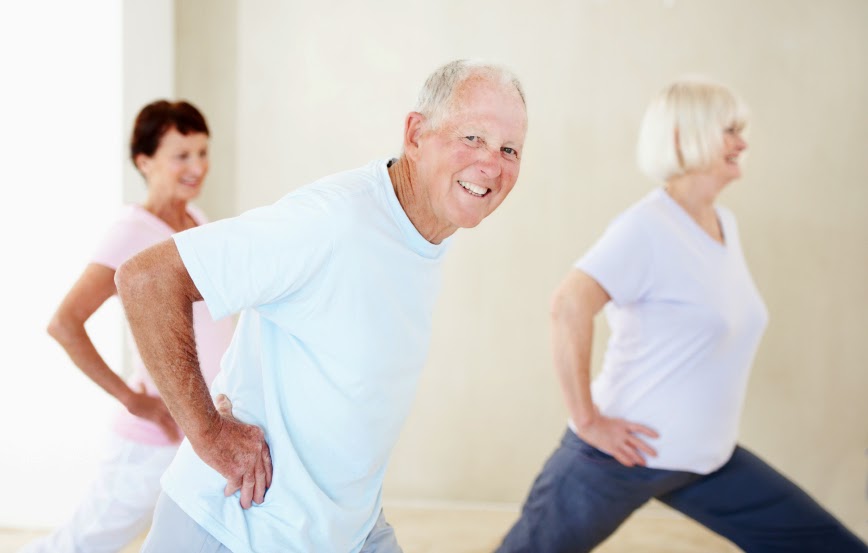
An active lifestyle benefits everyone, but it may be of particular benefit to seniors, as it also helps to relieve depression and isolation. Regular stretching exercises such as yoga can help maintain joint flexibility and slow age-related stiffening and shortening of the muscle fibers.
 

3. Strength Training

Weight training for the elderly may not sound like a good idea, but a 2007 study showed that strength training for six months can actually improve cell function, help preserve muscle strength and even reverse age-related cell impairment. The study compared the muscle strength of older adults to a sample of younger adults. Before the six-month period of strength training, the older group was 59% weaker than the younger group; at the end of training, they were only 38% weaker.1 Weight-bearing exercise, such as walking or weight training, has also been shown to help maintain bone mass, and twisting or rotational movements are beneficial for flexibility and balance.
 

4. Falls Prevention

A leading cause of morbidity and mortality among seniors is accidental falls. In fact, one in every three Canadians over age 65 will fall at least once in a year. This is due, in large part, to poor balance and limited mobility brought on by age-related changes to the MSK system. Check out our Best Foot Forward Program for tips on safeguarding the home and preventing falls.
 

5. Posture

Postural changes commonly associated with aging can also affect balance. As your body ages you can expect gradual changes, such as flattened foot arches and decreased vertebrae height, which can have an impact on how we walk or how we stand. However, conditioning your body starting now can minimize these changes and your ability to perform certain tasks later in life. Download the free Straighten Up Canada app and teach your body good posture now for a taller and stronger future.