Showing posts with label falls prevention. Show all posts

Wednesday, February 21, 2018

8 Tips For Winter Walking

Canadian Chiropractic Association (CCA)

Whether you’re going outside for some exercise, running an errand, or simply getting to and from a vehicle, winter walking can be hazardous.

There are some precautions you can take to make sure you get to your destination safely. Here are 8 tips to avoid a slip and fall on snow or ice:


  1. Choose the right footwear: there are some great options for winter boots that provide slip-resistance. Look for these features: rubber soles, non-slip tread
  2. Plan ahead: Give yourself extra travel time so you can walk without being rushed
  3. Don’t be distracted: Avoid walking and using your phone at the same time
  4. Be on the lookout for ice: Avoid icy patches when possible. When in doubt, assume that all dark and wet pavement surfaces are slippery
  5. Be prepared: If you don’t have salt for your stairs, driveway, or walkway, use sand or non-clumping cat litter to sprinkle on icy surfaces outdoors. If possible, only walk on paths that receive maintenance. Don’t take shortcuts where snow isn’t regularly removed
  6. Use support: Use handrails when available and steady yourself on the door frame of your car when getting in and out of a vehicle
  7. Don’t compromise your balance: Avoid carrying items in your arms as that may cause you to be unbalanced. Walking with your arms swinging at your sides is the best way to maintain balance. Make sure to keep your hands out of your pockets to help with balance and walking posture (don’t forget your gloves)
  8. Walk like a penguin: When the terrain is super slippery, try practising these “penguin-like” techniques for stability:
    • Keep your feet “flat-footed” (place your whole foot down at once—this also slows your walking speed)
    • Take short strides or shuffle your feet forward
    • Keep your knees slightly bent and feet pointed out. Lean forward slightly

Make sure to check for weather updates before you heard out and sign-up for weather notifications. Take care of yourself this winter!

If you’re experiencing any winter-related aches and pains, reach out to your local chiropractor.

Monday, December 12, 2016

Prepare To Avoid A Fall

By Dr. R. Greg Lusk, DC

As a father of 2 young children, aged 5 and 2, you can imagine that my house is always tidy and perfect.  Wait a second, that's only what it looked like in that magazine I was reading.  Instead, you will more realistically see dinky cars and dolls scattered across the floors and over furniture.  Often it feels like a mine field where I'm tip-toeing around items to avoid suddenly performing the splits after planting my foot on a car that blasts off as if in a drag race.  While I may, at least in my mind, still possess cat-like reflexes, the reality is that I'm getting a year older every year and my athletic prime is behind me.  With that in mind, I'm aware that falling is becoming a more likely possibility.
 
Particularly if you are over the age of 65, falling is common as one in three Canadians in this age group falls annually.  Often a serious injury results such as a wrist or hip fracture and these injuries can create a cascade of other health issues, in addition to a loss of independence.  Fortunately, there are a number of things you can do to reduce your risk.
 
Modifying your environment is a place to start, especially your home as that is where most falls occur.  Bathrooms, not surprisingly, pose risk due to wet surfaces and the transfers that occur in and out of the tub or on and off the toilet.  Investing in non-slip mats, grab bars, and a raised toilet seat can go a long way.  In the kitchen, swapping out loose mats for those with non-slip backing is helpful.  It is important to not use chairs or stools as an unstable ladder but instead have a footstool handy.  Better yet, keep everyday items in low cupboards and easily accessible so you don't need to use one at all.  Remember, your agility is likely not what it used to be.
 
The stairs are also a common problem area.  Keep them free of clutter, ensure there is no loose carpeting, and consider installing non-slip strips at the edge of each step.  Hand rails on either side are advisable and having ample lighting is important to increase awareness of any trip hazards.  Be careful when carrying items, such as full laundry baskets, as they reduce your visibility and steal at least one hand away from the handrails.  To make things easier, consider more trips with smaller loads.  It may take a little longer but if you change your mindset, you can become appreciative of the extra exercise.
 
An increased need to use the washroom, particularly at night, is another common reality of getting older.  Therefore, it is important that the path from your bedroom to the bathroom is clear and well lit with nightlights.  Finally, when outside the house, having salt or sand handy for dealing with ice and keeping paths clear of debris is recommended.
 
Taking care of yourself is also very important.  This can include improving your strength and balance with regular exercise, having eye and ear exams every 1-2 years, reviewing medications/supplements with your MD or pharmacist for potential side effects or interactions, eating and drinking regularly to minimize episodes of dizziness and weakness, and wearing good shoes and slippers with non-slip soles.
 
Having a fall doesn't need to be part of your aging experience.  Take action to improve your confidence.  This article is for general information purposes only and is not to be taken as professional medical advice.

Tuesday, September 15, 2015

Watch Your Step

Canadian Chiropractic Association

One of the things you have complete control over is – you! There are many choices you can make
that will reduce your risk of falling and protect your independence. Check out these tips for simple things you can do to stay safely on your feet.

Your Activities

  • Remove your reading glasses when you are walking. Always slip them off before you take a step.
  • Never climb on a chair or stool to reach something. Always ask for assistance.
  • If you have a pet such as a cat or dog, consider putting a bell or reflector on its collar. It’s easy to stumble across an affectionate or sleeping pet that’s in your path.
  • Take your time. If you frequently find yourself rushing to pick-up the phone, consider investing in a cordless phone that you can keep near you. Don’t rush to answer the door. The visitor will wait.
  • Always sit down to put on or take off shoes and clothing. Place a chair or bench near the entranceway.
  • Keep hallways and stairs free of children’s toys.
  • Wear shoes or slippers with non-slip soles indoors. That means you might have to giveup that pair of loose, comfy slippers with the worn soles.
  • Ask for help if you need it. Most people like to lend a hand.

Download the Watch Your Step information sheet


CANADA’S CHIROPRACTORS. HERE TO HELP.

A Doctor of Chiropractic can help you assess your risk of falls by evaluating your strength and balance. Your chiropractor can also prescribe exercises and give you practical advice to reduce your risk.

For more information visit: www.nhwc.ca

Wednesday, April 1, 2015

Tips for Optimizing MSK Health in Your Later Years

Author: CCA Staff Team

 As the baby boomer generation reaches the age of retirement, seniors now make up the fastest-growing age group in Canada. By 2030, it is expected that 23.6% of Canadians will be age 65 or older. To give some perspective, in 2013 a mere 15.3% of the Canadian population was 65 or above.
 
How Aging Affects Your MSK Health
 
Not surprisingly, as we age and our bodies accumulate the effects of daily wear and tear, our musculoskeletal (MSK) system can become compromised as we are more susceptible to injury. Stiffer muscles, decreased range of motion and a loss of elasticity of connective tissue (ligaments, tendons and muscles) can decrease mobility and affect balance. Vertebrae and other bones lose some of their mineral content with time. For the spine, this can result in decreased vertebrae height, narrowed foramen and even compression fractures. Hip and knee joints may also lose cartilage. The healing process can be slowed and repair can take longer. This is more pronounced in the vertebral column.
 
Common Age-related MSK Conditions
 
Degenerative changes to the MSK system start developing around age 30, and like everything relating to our health, is impacted by the choices we make every day. Chiropractic care can be very effective in helping seniors with pain management, range of motion, joint degeneration, posture and balance. Thinking about age-related degeneration should not be put off until you’re older; making choices now that promote health can help slow the process.
 
Some of the most common age-related MSK concerns are osteoporosis, spinal stenosis and limited mobility, and there are simple steps you can take to reduce your chances of developing them.
 
Tips for Optimizing MSK Health in Your Later Years


1. Diet

A diet rich in micro nutrients helps to decrease the risks of developing bone defects and muscular weakness. Make sure you get adequate amounts of vitamins C and D throughout your lifetime to promote healthy functional growth of muscles and bones, as well as calcium for strong bones to help avoid osteoporosis
 

2. Stretching

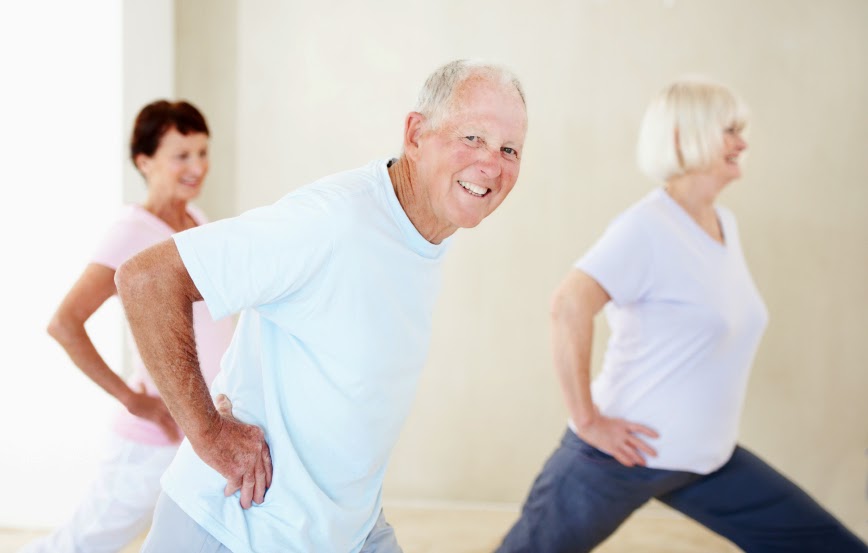
An active lifestyle benefits everyone, but it may be of particular benefit to seniors, as it also helps to relieve depression and isolation. Regular stretching exercises such as yoga can help maintain joint flexibility and slow age-related stiffening and shortening of the muscle fibers.
 

3. Strength Training

Weight training for the elderly may not sound like a good idea, but a 2007 study showed that strength training for six months can actually improve cell function, help preserve muscle strength and even reverse age-related cell impairment. The study compared the muscle strength of older adults to a sample of younger adults. Before the six-month period of strength training, the older group was 59% weaker than the younger group; at the end of training, they were only 38% weaker.1 Weight-bearing exercise, such as walking or weight training, has also been shown to help maintain bone mass, and twisting or rotational movements are beneficial for flexibility and balance.
 

4. Falls Prevention

A leading cause of morbidity and mortality among seniors is accidental falls. In fact, one in every three Canadians over age 65 will fall at least once in a year. This is due, in large part, to poor balance and limited mobility brought on by age-related changes to the MSK system. Check out our Best Foot Forward Program for tips on safeguarding the home and preventing falls.
 

5. Posture

Postural changes commonly associated with aging can also affect balance. As your body ages you can expect gradual changes, such as flattened foot arches and decreased vertebrae height, which can have an impact on how we walk or how we stand. However, conditioning your body starting now can minimize these changes and your ability to perform certain tasks later in life. Download the free Straighten Up Canada app and teach your body good posture now for a taller and stronger future.