Showing posts with label Posture. Show all posts

Tuesday, March 15, 2022

Tips To Take Care Of Your Posture When Travelling


With March Break upon us, many people are travelling.

🚙While time with family and vacations are relaxing and a great way to regenerate energy and zest, the process of travelling itself can often take a toll on our bodies and musculoskeletal system. ⛱
Carrying luggage, and long flights or road trips can place stress on the lower back which may result in back pain or other musculoskeletal conditions. ✈
📍 The following tips may assist in keeping your back safe from injury while travelling:
1️⃣ Supporting the curve in your lower back is important. To avoid sitting for prolonged periods in an “unnatural” position, place a small rolled-up airline pillow, blanket or a towel or lumbar pillow to fit and support the curve of your lower back. You may consider sitting in a slightly reclined position to relieve the stress on your spine. 🚗
2️⃣ Sit Properly. While seated, your knees should be supported and bent at more or less a 90 degree angle. If your seat is too high, consider placing your feet on something that can act as a firm footrest to keep your knees at a right angle. 🛩
3️⃣ Move! Sitting in a static position for extended periods of time can stiffen the back muscles and cause creep in the spine. Movement is key to keeping the spine and musculoskeletal system healthy. Get up, stretch and move around every 20 to 30 minutes when possible. ⏱🚶‍♀️
4️⃣ Use proper lifting technique. Use the entire body to turn when lifting heavy luggage. Pivot with your feet, not your back, so that your whole body moves, rather than only twisting your spine. 🧳
5️⃣ Don’t make luggage or carry-ons too heavy. Manage what you pack to avoid being left with heavy luggage to carry and maneuver. Lifting excessive weight overhead, for example, can cause hyperextension injuries. ⚠
Making smart choices throughout your travels will help you to enjoy your vacation comfortably once you arrive. 😎

Wednesday, June 16, 2021

Tidying Up Without The Strain


If you are reading this blog post, you may have pain in your spine, muscles, tendons, or joints. Now think about your daily activities over the past few months: have you been sitting for longer periods of time? Or maybe perhaps you have been doing more household tasks that require bending and lifting.


11 million Canadians suffer from disorders of the musculoskeletal system, including injuries such as sprains and strains, chronic or acute low back and neck pain, arthritis, as well as other congenital or acquired disorders.


When we overuse our joints, muscles, and tendons, injuries such as carpal tunnel syndrome can develop. But there are things you can do to reduce the risk and strengthen your body while you tidy up around the house.


Warm up

With any type of physical activity, it is very important to warm up. Before you start cleaning or organizing, walk around the house or do some simple stretches to help prevent injury.


Break up heavy loads

Think back to the last time you did groceries. Did you carry all the bags into the house at once instead of taking multiple trips to the car? We know how tempting it is to make fewer trips, but you may be risking an injury. Take the extra few minutes and only carry a few bags at once. Don’t drive? Consider investing in a cart or buggy rather than carrying heavy bags.


Divide and conquer

Do you save chores for your day off and power through your list? Dedicating 30 minutes every day to your household tasks can decrease your stress and risk of injury or fatigue.

Plus, getting a little bit done each day allows you to have more time on the weekends to spend with family and friends.


Maintain proper posture

Vacuuming and mopping the floors often require excessive bending, reaching, and twisting. Avoid stretching out your arms and bending at the waist. Instead, hold the vacuum or mop handle close to your body and walk back and forth with it. Keep your spine relaxed and neutral while doing these chores. Your back will thank you!


Switch it up

Prevent unwanted strain on your shoulders, neck, and back and use both sides of your body when cleaning. Occasionally, consider cleaning the bathroom tiles or washing dishes with your non-dominant hand.


Bonus Tip: Use proper lumbar supports if you find yourself sitting for long spells. Every 20-30 minutes stand up and stretch out your spine.


With these tips, you can feel confident in tackling your to-do list safely and effectively. However, if an injury does occur, visit one of our Chiropractors to get your spine back in working order.

#cleaning #housework #posture #physcialactivity #musclestrain #chiropracticcare #chiropractor #musculoskeletal #newhamburgchiropractic #newhamburgmassage #newhamburgphysiotherapy #newhamburgorthotics #newhamburgwellness #chiropractic #massage #physiotherapy #customorthotics #exercise #rehabilitativeexercise #wecanhelp #recordreaderaward2020 #newpatientswelcome #newhamburg #wilmot

Wednesday, July 25, 2018

Tips for Bending With Low Back Pain


By Dr. R. Greg Lusk, DC

Sitting and standing were discussed thoroughly in my last article as they are common activities that trigger low back pain (LBP). Modifying how they are done form part of our daily upkeep of our backs, referred to as spine hygiene, which when coupled with appropriate exercises can help make you more resilient to symptoms. Bending is another frequent trigger for  low back pain and how it can be performed in a more spine sparing or friendly way will form the focus of this article.

If you have or had LBP, it is highly likely that bending is or was an aggravator to your symptoms. Imagine yourself flexing forward to put on socks, stooping to brush your teeth, or trying to pick up that pen you dropped on the floor. Many of you will dread the thought of having to do that when you have LBP. However, you can employ strategies to do this that spare the spine, allowing it to stay in neutral, thereby minimizing pain. Squatting, by moving predominantly at the hips and knees, will allow you to lower yourself without rounding your back. To get even lower you could use a lunging pattern. To perform this move, you stagger your feet one in front of the other and offset side to side, so you don't feel like you're standing on a balance beam. Once again, you move about the hip and knee joints while lowering the rear leg toward the floor, keeping the back straight throughout. From the bottom of this position you can generally reach near the floor with your hand with minimal spine motion needed. Good technique is paramount to minimize stress on the hip and knee joints so symptoms are not produced there, which may be particularly challenging for some of you with a history of injury and or arthritis there. An alternative that may be helpful is referred to as the golfer's lift or pick-up. Similar to the action you'll see a golfer perform to retrieve the ball from the hole, you balance on one leg while you hinge about the hip joint, lowering a hand toward the ground while the free leg extends backward as a counter-balance. Particularly for relatively light items, this is an effective way to get your hand low while keeping your spine neutral and your core tight. Balance may be an issue for some so using your free hand to lean on a wall or hold onto another firmly rooted object will provide another contact point for improved stability in this position.

The stooped (i.e. slightly bent) posture you can observe when someone is brushing their teeth over the sink, gathering laundry out of the washer or dryer, or kneeling to do gardening can also be modified to become more kind to your spine. With these activities we use our arms but really only need the free motion of one hand to be efficient. The other hand, which is typically non-dominant, can instead form a contact point of support on either the vanity counter, the appliance, or ground, while you also hinge at the hips and keep your spine neutral. The support hand now bears much of the load that leaning forward imposes on the spine, which is surprisingly substantial when you consider how much the upper half of our bodies weigh coupled with the multiplying power of leverage.

Good luck employing some of these ideas to bend with increased ease. With low back pain the more we can reduce all of the contributing sources of aggravation the more likely you'll experience decreased symptoms and prolonged relief. This article is for general information purposes only and is not to be taken as professional medical advice.


Friday, March 2, 2018

Air Travel Comfort Tips


By Dr. John A. Papa, DC, FCCPOR(C)

Comfort is not usually the first word that comes to mind when someone mentions flying.  Sitting cramped in a small space for a long plane ride can also lead to muscle and joint pain.  Here are some helpful tips for a more enjoyable voyage.

Choose the Correct Seat - Some airlines fill the plane from front to back, so ask for a seat in the back row to increase your chances of having an empty seat next to you.  If the arm rests lift up, you might even be able to lie down.  Aisle and emergency exit seats maximize leg room and are less claustrophobic.  If you are susceptible to motion sickness, request a seat over the wings and try to schedule flights on larger airplanes.

Keep Moving - Moving around is good for your circulation and helps to prevent swollen feet and ankles.  Wear loose clothing and walk about the cabin periodically every 60 to 90 minutes.  Wear shoes you can slip off easily.  Every so often, draw circles with your toes and contract your calves to help prevent blood from pooling in your legs.  Tapping your feet can also help increase circulation and reduce the chance of muscle cramping.

Stretch it out - Try not to place anything under the seat in front of you so you can stretch your legs out.  Quick and easy stretches also include standing up and raising your arms above your head, rotating your shoulders back and forth, and moving your head side to side.

Keep Good Posture While Seated - Position your lower back against the back of the chair to obtain the greatest amount of support for your spine.  A rolled sweater or blanket can also be used for added support.  Make sure that your weight is evenly distributed on your seat, your shoulders are not rounding forward, and you are not slouching.  Support your neck and head with a pillow if necessary and avoid awkward positions if trying to rest or sleep.  Try not to stay in one position for a long period of time.

Additional Tips
·     Eat Right - Eat a light, non-fatty meal just before you leave for the airport.  This can make handling turbulence a little easier.
·     Handling Pressure - Chewing gum, yawning or sucking on hard candies can help to relieve the pressure that builds up in your ears as the airplane ascends and descends.  This is not recommended for toddlers.  For young children, sipping a drink may help.
·      Prevent Dehydration - The air in most airplanes can dry out your skin and cause eye and nasal dryness.  Take a moisturizer with you for your skin and wear glasses instead of contact lenses to prevent eye dryness.  Drink enough water and steer clear of caffeine and alcohol as they further dehydrate you.  Alcohol can also interfere with your ability to sleep.

In the event that you suffer from ongoing muscle and joint pain following your trip, you should contact a licensed health professional.  For more information, visit www.nhwc.ca.  The author credits the CCA in the preparation of this educational information for use by its members and the public.

This article is a basic summary for educational purposes only.  It is not intended, and should not be considered, as a replacement for consultation, diagnosis or treatment by a duly licensed health practitioner.

Wednesday, May 10, 2017

Solutions For Overcoming Poor Sitting Posture

By Dr. John A. Papa, DC, FCCPOR(C)

An ideal posture allows an individual to maintain an efficient, strong, and balanced position while interacting and adapting to their physical environment.  Good postural habits can help decrease abnormal and excessive physical strain on the body, thereby minimizing the chance of injury.
 
Unfortunately, modern technology has significantly influenced our daily postural habits, which has resulted in having people sit more often and for longer periods of time.  Individuals exposed to these sitting positions may adopt a poor posture that includes losing the natural hollow of the low back, rounding or slouching of the upper back and shoulders, and a forward head poking position.
 
Less than ideal posture puts cumulative compression, stretch, and shear forces on the body.  The cumulative effects of sitting are often offset by the body’s ability to compensate.  However, even in the absence of pain, these compensatory changes may begin a vicious cycle of unbalanced motion, muscle and joint stress, and secondary areas of discomfort.  As a result, the physical consequences of chronic poor posture can lead to symptoms such as muscle and joint stiffness, nerve pain, headaches, shoulder pain, neck pain, upper and lower back pain.
 
Listed below are some potential solutions that can minimize the chance of postural injury, specifically as it pertains to the sitting position:
 
1.    Pay attention to how you sit by making sure weight is evenly distributed in your seat, your shoulders are not rounding forward, and you are not slouching.  Your head should be resting on your torso and not poking forward.

2.    Take a break from sitting with 10 to 30 second stretch or posture breaks every 20 to 40 minutes.  Some activities such as computer work, talking on the phone, and business meetings can also be done while standing.

3.    The use of a properly designed workstation (i.e. adjustable chair and desk), along with ergonomic tools and assistive devices (i.e. speakerphones, foot stools, lumbar supports) can help maintain mechanically advantageous positions while working in a seated position.

4.    Avoid unnatural positions such as looking down, awkward twisting, or slouching for long periods of time as this can cause unnecessary strain.  A simple solution may be to bring your smartphone, tablet, or book closer to eye level, or adjusting your seat position to help you maintain a more natural/neutral position.

5.    Engaging in regular physical activity and exercise can keep your body strong and help overcome the effects of cumulative strain associated with poor posture.  Exercise activities can include general cardiovascular conditioning, along with postural, stretching and strengthening exercises for the neck, shoulders, upper and lower back regions.

Prolonged sitting and poor posture can undeniably cause real physical change and breakdown in the body.  If you have ongoing pain as a result of postural strain, you should contact a licensed health professional who deals in the diagnosis and treatment of these conditions.  For more information visit www.nhwc.ca.

This article is a basic summary for educational purposes only.  It is not intended, and should not be considered, as a replacement for consultation, diagnosis or treatment by a duly licensed health practitioner.

Wednesday, January 18, 2017

Daily Routine Can Be A Pain

Ontario Chiropractic Association


Your daily routine can be a pain … literally

We live in a world where we’re constantly in a hurry, juggling multiple tasks and carrying our belongings with us everywhere. And, believe it or not, this can have serious consequences on your back health. In fact, back pain sends more patients to doctors than any condition other than the common cold.1 Here are some common activities that negatively impact Canadian’s back health:
 
ScenarioHow to fix it
Commuting1: just like sitting at your desk, hunching over your steering wheel can cause your muscles to tighten, curving your back.  Over time this can result in long-term lower back problems. This is important for the 15.4 million Canadians who commute to keep in mind2.
How to fix it: be sure to sit at a 90 degree angle and don’t fully extend your legs. Move your seat up to allow yourself to sit up straight. Adjust your lumbar to fit your back, and if it’s not enough support, try rolling up a towel to help decrease stress on your lower back.
Work life: did you know sitting puts 40 per cent more pressure on your spine than standing? It’s important to remember your posture especially when you’ve had a long day at your desk1.
How to fix it: practice ‘active sitting’ with your feet flat on the floor in front of you with your back straight, your shoulders squared and chin parallel with the floor. Also, ensure your workspace is set up to enable frequent breaks from sitting, like getting up to go to the printer and taking phone calls while standing.
Carrying your belongings: when you’re carrying a heavy purse or laptop bag, your shoulders become out of line.  This can cause your muscles to ache and throw your spine out of line1.
How to fix it: reduce the number of items you carry with you. Also consider using a backpack to help distribute the weight of your load evenly across your body.  This will help avoid the stress of isolated muscles overcompensating for unevenly distributed weight.
Improper lifting: you’re not alone if you have strained your back while lifting heavy boxes. Lifting heavy items improperly can put undue pressure on your spine3  and even cause spinal disc injury4.
How to fix it: picture yourself doing the lift before engaging to ensure you’re keeping the object in front of you, your back is straight and you’re lifting with your knees/hips rather than your back.
  1. http://www.prevention.com/health/health-concerns/habits-cause-back-pain
  2. Commuting to work. Statistics Canada – http://www12.statcan.gc.ca/nhs-enm/2011/as-sa/99-012-x/99-012-x2011003_1-eng.cfm
  3. http://backandneck.about.com/od/ergonomics/tp/3badbackmoves.htm
  4. http://www.spine-health.com/conditions/sports-and-spine-injuries/avoid-back-injury-right-lifting-techniques

Monday, October 24, 2016

Pokemon No! Tips On How To Beat The Pain Caused By Your Favourite Digital Devices

Ontario Chiropractic Association


As you read this article, more than likely on your phone or tablet, take a moment to notice your posture. There’s a good chance that your back is hunched, your head is tilted forward and your shoulders are rounded. Many students from grade school to university spend a large portion of their day looking at a screen as they text friends, read e-books and write essays. Be sure to keep an eye on your posture during these activities. Your back and neck will thank you.


Did you know that bending your head to look at your phone can put up to 60 pounds of pressure on your spine? A 2014 study in Surgical Technology International showed that even a 15-degree head tilt adds 27 pounds of pressure. As we use our phones and laptops more and more, that stress adds up!
 
Hand-held devices aren’t going anywhere soon — they’re useful and convenient. As you tap and swipe, follow these tips to avoid the aches and pains that come with the digital age.


Take a break
Holding up your phone or tablet for extended periods of time can strain the muscles in your shoulders, arms and fingers. Let your arms rest at your sides every so often.
 
The 20-20-20 rule
Give your eyes a break! Every 20 minutes, take 20 seconds to look about 20 feet ahead (or as far as possible).
 
Change positions
Next time you’re thinking of pulling an all-nighter, try to avoid sitting for longer than 30 minutes at a time. Get up and walk around!
 
Aim higher
Raise your phone up closer to eye level to reduce strain on your neck. When watching lectures on your tablet or laptop, be sure to prop it up against something so your shoulders and arms can relax.
 
Stretch it out
Slowly turn your head towards your left shoulder, hold for five seconds and repeat on your right side. You can also download Straighten Up Canada! — a free app developed by Canada’s chiropractors with videos of stretches you can do to help your posture in just three minutes!


The only thing that’s more important than “perfect” posture is movement. If you still have pain and discomfort after trying these tips, visit a chiropractor to develop a plan to keep you pain-free in the classroom.

Monday, August 22, 2016

Pain Is A Roadblock To Your Family Vacation

Ontario Chiropractic Association (OCA)


For many families, a road trip is an essential part of any summer vacation.

Unfortunately, muscle and joint pain doesn’t take days off, quickly turning this joyful time into a painful one.
 
Whether you’re lifting heavy luggage or simply sitting in the car for extended periods of time, it’s very common to experience back, neck, shoulder and other joint pain at some point during your travels. Since having fun should be your highest priority, its important to maximize your enjoyment by ensuring that you’re being as safe as you can be.
 
Did you know?

Sitting for long periods of time can be very harmful to your body. Even in the most comfortable cars, certain pressures and forces from awkward positions can result in restricted blood flow.
 
To increase your chances of a pain free trip
  • Choose the right luggage Choosing a bag with wheels and a handle goes a long way to ligthen your load. Alternatively, quality backpacks are a good option as they distribute weight more evenly than other types of luggage.
  • Get comfortableSeat adjustment is critical for avoiding pain on the road. Make sure to adjust the seat to fit you comfortably. If neccesary, roll up a towel or pillow and place it between your lower back and the seat for more support.
  • Bring iceBring a cooler filled with ice packs to help relieve pain on the road. If you need to ice your back, limit it to 15 minutes at a time.
  • Make frequent pit stops
    T
    his gives everyone a chance to stretch and change out of a seated position for a short period of time. Each stop also provides an opportunity to refresh and reduce tension that has been building up in your body.
How to lift your luggage properly
  • Break the action upWhen loading a suitcase into a car or truck, try lifting it onto a chair or step-stool first, rather than doing it all in one motion
  • Use your legsWhen lifting your luggage, first get close to the load and stand with your feet shoulder-width apart
    Bend at the knees and let your leg muscles do the lifting, rather than your back
  • Avoid twistingInstead, turn your feet in the direction you are headed and turn your entire body in that direction.

Wednesday, August 10, 2016

Considerations For Shoulder Pain - Part 2

By Dr. R. Greg Lusk, DC

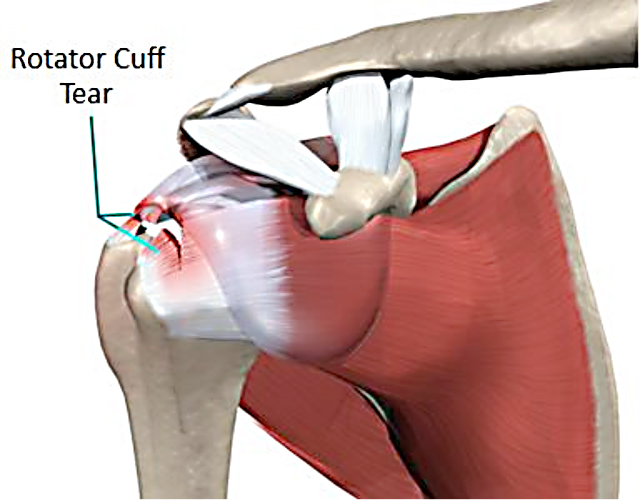
Last month's article introduced causes of shoulder pain and focused on the structure and general function of the shoulder through ranges of motion.  As a ball and socket joint, it high-lighted the importance of the ball staying well centred in its socket as you move your arm, so as to avoid injury or irritation to the various soft tissues around the shoulder.  That being said, it is possible to have "damage" to your rotator cuff without any symptoms.  Research using diagnostic imaging (i.e. MRI/ultrasound) has shown that up to 40% of elite overhead athletes have asymptomatic rotator cuff tears.  They are also found in the general population at an increasing frequency with advancing age.  Up to 1 in 5 people aged 60 to 69 and 31% of those aged 70 to 79 have been shown to have symptom free cuff tears.  This clearly shows that normal function can be preserved despite structural changes and offers encouragement that satisfactory function can be restored after an injury even when incomplete healing occurs.


So, this begs the question "What can be done to preserve or optimize shoulder function?"  Maintaining good posture is a good place to start.  This allows the shoulder blades, the "sockets", to move as they should, stay out of the way, and keep "the ball" well positioned.  To illustrate this, stand with an intentionally poor posture with your mid back and shoulders hunched as much as possible.  Now try to raise your arms forward and up as high as you can and take note of your range.  Then, stand with good posture - back erect and your shoulders pulled back slightly - and raise your arms again.  If done properly you should notice that the range of your shoulder motion is greater with better posture.  The shoulder blades can tip backward as needed and not be limited by the rib cage, thereby allowing your arms to end up near your ears.  Therefore, if you need to reach high for things or are doing overhead exercises, be sure to start with a good posture.  A good overall posture also decreases strain on the neck, which is often an overlooked source of pain that is perceived at the shoulder.
 
 
Improving mid back mobility is also important.  While lifting your arms as described above, your mid back should extend slightly to assist the motion.  However, this area of the back, the thoracic spine, is commonly stiff due to the many hours we spend being sedentary with a slouched body position and doesn't move as freely as needed.  Fortunately there are a number of things you can do to improve mobility here.  Starting simply, you could lie on the floor with a small, rolled-up towel lying under and across your mid back.  As you relax and lay flat this will arch your back slightly, and you can also adjust your body up or down to target different areas.  To get more aggressive over time you can use a foam roller to increase the arch even further.

 
Maintaining the health and flexibility of shoulder soft tissues, rotator cuff muscle strength and stability, and other shoulder blade motions are additional aspects of a well functioning shoulder.  However, unlike the above considerations that are almost universally applicable, what may be needed for each individual is quite variable and is best assessed on a case by case basis by a skilled health care professional.

 
This article is for general information purposes only and is not to be taken as professional medical advice.