Showing posts with label rotator cuff tear. Show all posts

Wednesday, August 10, 2016

Considerations For Shoulder Pain - Part 2

By Dr. R. Greg Lusk, DC

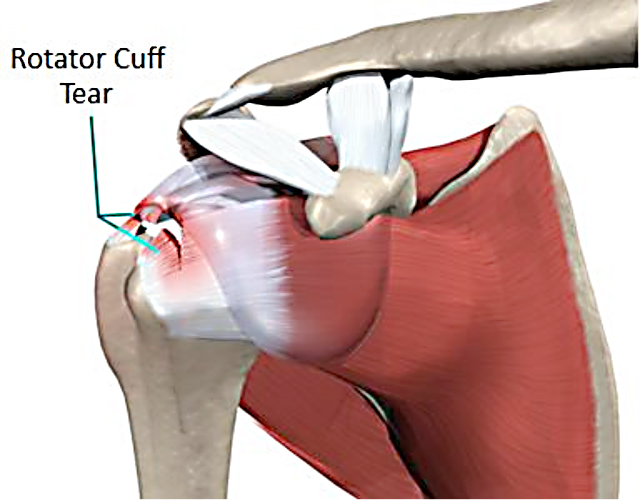
Last month's article introduced causes of shoulder pain and focused on the structure and general function of the shoulder through ranges of motion.  As a ball and socket joint, it high-lighted the importance of the ball staying well centred in its socket as you move your arm, so as to avoid injury or irritation to the various soft tissues around the shoulder.  That being said, it is possible to have "damage" to your rotator cuff without any symptoms.  Research using diagnostic imaging (i.e. MRI/ultrasound) has shown that up to 40% of elite overhead athletes have asymptomatic rotator cuff tears.  They are also found in the general population at an increasing frequency with advancing age.  Up to 1 in 5 people aged 60 to 69 and 31% of those aged 70 to 79 have been shown to have symptom free cuff tears.  This clearly shows that normal function can be preserved despite structural changes and offers encouragement that satisfactory function can be restored after an injury even when incomplete healing occurs.


So, this begs the question "What can be done to preserve or optimize shoulder function?"  Maintaining good posture is a good place to start.  This allows the shoulder blades, the "sockets", to move as they should, stay out of the way, and keep "the ball" well positioned.  To illustrate this, stand with an intentionally poor posture with your mid back and shoulders hunched as much as possible.  Now try to raise your arms forward and up as high as you can and take note of your range.  Then, stand with good posture - back erect and your shoulders pulled back slightly - and raise your arms again.  If done properly you should notice that the range of your shoulder motion is greater with better posture.  The shoulder blades can tip backward as needed and not be limited by the rib cage, thereby allowing your arms to end up near your ears.  Therefore, if you need to reach high for things or are doing overhead exercises, be sure to start with a good posture.  A good overall posture also decreases strain on the neck, which is often an overlooked source of pain that is perceived at the shoulder.
 
 
Improving mid back mobility is also important.  While lifting your arms as described above, your mid back should extend slightly to assist the motion.  However, this area of the back, the thoracic spine, is commonly stiff due to the many hours we spend being sedentary with a slouched body position and doesn't move as freely as needed.  Fortunately there are a number of things you can do to improve mobility here.  Starting simply, you could lie on the floor with a small, rolled-up towel lying under and across your mid back.  As you relax and lay flat this will arch your back slightly, and you can also adjust your body up or down to target different areas.  To get more aggressive over time you can use a foam roller to increase the arch even further.

 
Maintaining the health and flexibility of shoulder soft tissues, rotator cuff muscle strength and stability, and other shoulder blade motions are additional aspects of a well functioning shoulder.  However, unlike the above considerations that are almost universally applicable, what may be needed for each individual is quite variable and is best assessed on a case by case basis by a skilled health care professional.

 
This article is for general information purposes only and is not to be taken as professional medical advice.

Friday, July 15, 2016

Considerations For Shoulder Pain - Part 1

By Dr. R. Greg Lusk, DC

Although back pain, neck pain, and headaches are the three most common reasons why individuals seek out the services of a chiropractor, shoulder pain is another frequent complaint seen in the office.  Sometimes there is a traumatic mechanism to explain the onset of pain, such as a fall or over-exertion with lifting, reaching, pulling, or throwing types of activities.  However, often the cause is not very obvious, suggesting that a more cumulative process has resulted in a pain experience at the shoulder.  Discussing the structure and function of the shoulder will help us understand how this may occur.  Note - it is also important to realize that pain felt at the shoulder may not have its origin at the shoulder at all but instead have a more central source, commonly the neck region, with structures either referring or radiating pain to the shoulder, with or without the presence of neck discomfort.
 
The shoulder is a ball and socket joint.  As such, it is a very mobile joint with many movement possibilities, but with greater potential for instability as well.  The "ball" is the head of the upper arm bone called the humerus and the "socket" is a shallow depression on the shoulder blade, made deeper only by the addition of projections of cartilage called the labrum.  The shoulder blade essentially floats on our mid back by way of muscular attachments with its only direct bony connection to the rest of our skeleton being made via the collar bone.  The four rotator cuff muscles attach the ball to the shoulder blade and function to keep the ball centred in the socket while larger muscles around the shoulder, the deltoid and "pecs" for example, create the actual movement of the shoulder/arm.  With ranges of motion, the ball rotates and glides in the socket, the shoulder blade itself moves in a variety of directions, and the collar bone rotates and tilts.  The mid back also needs to extend.  All of these motions have a pre-wired sequencing or rhythm in which they occur to move the shoulder optimally and basically keep the ball in the socket.  When this pattern of motion is altered due to a new injury or persists after an older problem resolved but wasn't fully rehabilitated, or simply as a result of postural imbalances, this sets the stage for future trouble.
 
Unlike other joints in the body where the muscles that move and/or stabilize the joint surround the bony connection, the shoulder is unique in that some soft tissues (i.e. rotator cuff muscles and tendons, bursae) are contained in an area surrounded by bony structures.  To orient you, feel the bony tip of your shoulder blade, named the acromion, where the shoulder slopes down to become the arm.  The area beneath the acromion is appropriately called the sub-acromial space, which houses those soft tissues, sandwiching them between the ball of the ball and socket below and the acromion above.  If the rhythm mentioned previously becomes altered and the ball is not well maintained in the socket throughout ranges of motion, these tissues can become overly pinched, or "impinged" between the bony surfaces.  Over time this can result in a number of different painful conditions, such as bursitis, a biceps tendonopathy, a rotator cuff tear or tendonopathy, shoulder impingement syndrome, and arthritis to name a few.
 
Part 2 of this article will continue this discussion and suggest a few things one may try to help optimize shoulder function.  This article is for general information purposes only and is not to be taken as professional medical advice.