Showing posts with label Back Pain. Show all posts

Wednesday, March 22, 2023

Tidying Up Without The Strain


11 million Canadians suffer from disorders of the musculoskeletal system. ๐Ÿ When we overuse our joints, muscles, and tendons, injuries can develop. But there are things you can do to reduce the risk and strengthen your body while you tidy up around the house. ๐Ÿ 


✅ WARM UP

Before you start cleaning or organizing, walk around the house or do some simple stretches to help prevent injury. ๐Ÿšถ‍♂️


✅ BREAK UP HEAVY LOADS

Instead of carrying all of the grocery bags into the house at once, take the extra few minutes and only carry a few bags at once. Don’t drive? Consider investing in a cart or buggy rather than carrying heavy bags. ๐Ÿ›’


✅ DIVIDE AND CONQUER

Dedicating 30 minutes every day to your household tasks can decrease your stress and risk of injury or fatigue. Plus, getting a little bit done each day allows you to have more time on the weekends to spend with family and friends. ⏲


✅ MAINTAIN PROPER POSTURE

Vacuuming and mopping the floors often require excessive bending, reaching, and twisting. Avoid stretching out your arms and bending at the waist. Instead, hold the vacuum or mop handle close to your body and walk back and forth with it. Keep your spine relaxed and neutral while doing these chores. Your back will thank you! ๐Ÿงฝ๐Ÿงน


✅ SWITCH IT UP

Prevent unwanted strain on your shoulders, neck, and back and use both sides of your body when cleaning. Occasionally, consider cleaning with your non-dominant hand. ๐Ÿ–


✨ BONUS TIP: Use proper lumbar supports if you find yourself sitting for long spells. Every 20-30 minutes stand up and stretch out your spine.


With these tips, you can feel confident in tackling your to-do list safely and effectively. However, if an injury does occur, visit one of our Chiropractors to get your spine back in working order. ๐Ÿ‘


#cleaning #chores #springcleaning #backpain #injuryprevention #posture #lifting #warmup #strengthen #chiropractic #chiropractor #health #wellness #wecanhelp #wilmot #newhamburg #baden #tavistock #wellesley #waterlooregion

Monday, January 17, 2022

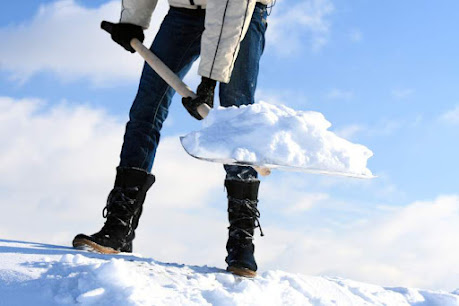
Tips To Avoid Back Pain When Shovelling Snow

Apart from dressing properly for the weather and making sure you have a sturdy, lightweight shovel, there are a few practices you can follow to help make snow-shovelling safer.


·        Stand with stability: Stand with your feet at hip-width apart to maintain your balance. It’s also best to wear boots that are non-slip when you shovel. This will help protect you from sliding when shovelling.


·        Keep the weight close to your body: Hold the shovel close to your body to guard against straining or pulling a muscle. When the snow is deep, try to shovel smaller amounts (3–5 centimetres/1–2 inches) of snow at a time.


·        Grip strategically: Space your hands apart on the handle to increase your leverage when lifting the snow.


·        Lift with your legs: Bend from your knees, not your back, when lifting. Not only does it protect your back, but you can strengthen your legs as well!


·        Engage your core: Tighten your stomach muscles when lifting snow. This helps to protect your back as you lift.


·        Don’t twist: Avoid twisting your body when you lift. Move your feet instead to turn your body.


·        Don’t fling the snow: Make sure to walk to place the snow on the side of the path rather than throwing it. Turn your feet in the direction you’re dumping the snow—this better positions you to maintain good form. Your whole body will thank you.


Snow shovelling can be a very strenuous activity, and even more so without the correct, protective form. Ask one of our Chiropractor more tips on improving your strength and stability.


With the proper preparation, tools, and technique you can make shovelling safer for you, and your walkways safer for your family, friends, and neighbours.


Happy shovelling!


Tuesday, November 23, 2021

Common Back Pain Myths

By Dr. John A. Papa, DC, FCCPOR(C)

80% of all Canadians will suffer from at least one significant episode of back pain in their lives.  Below are some of the common myths surrounding back pain and what modern science has to say about them.

Myth 1:  If you’ve injured a disc (i.e., herniation, rupture), you must have surgery.

Truth:  Surgery to relieve back pain should only be used as a last resort.  Even if specific testing reveals a damaged disc, recovery often results without surgery.  An injured disc in the back may become inflamed and put pressure on nerves and surrounding pain sensitive structures.  Non-surgical treatment aims at minimizing pain and discomfort from joint irritation and muscle spasm, and prescribing specific exercises to help with recovery.


Myth 2:  Most back pain is caused by injuries or heavy lifting.

Truth:  Injuries caused by heavy lifting do not account for all back pain.  In up to 85% of cases,
individuals can’t recall a specific incident that brought on their back pain.  Back pain can result from a single exposure to a bending or twisting incident, or it can be caused by small cumulative loads placed on the spine over time.  Scientific research also links the following risk factors to back pain: smoking, being overweight, poor posture, poor physical fitness, and stressful life events.


Myth 3:  X-ray images, CT and MRI scans can always identify the cause of pain.

Truth:  Even the best imaging tests cannot identify a muscle spasm or ligament sprain that may be the cause of pain.  Imaging is usually reserved for special cases such as those suffering trauma in a fall or accident, surgical candidates, unresolved cases of severe chronic back pain, and suspicion of underlying tumor, infection or other serious disease.


Myth 4:  If your back hurts, you should take it easy until the pain goes away.  Bed rest is the mainstay of therapy.

Truth:  Clinical data indicates that individuals who remain active do better than those who try bed rest.  Remaining active means continuing with daily activities as tolerated and easing back into a regular routine.  Activities may have to be modified while recovery occurs, but movement is important for recovery provided it does not put the individual at risk for further injury.


Myth 5:  Diagnosing back pain is simple and straightforward.

Truth:  The causes of back pain can be complex and difficult to diagnose.  There are many biological tissues that can generate pain in the back.  These may include muscles, ligaments, bones, nerves, and joints.  Quite often it is a combination of several or all of these structures that can manifest into back pain, and potentially radiating pain into the buttock or leg regions.  Sometimes stress and depression can also contribute to back pain.  A licensed health practitioner who deals with back pain is best trained to diagnose the source(s) of your problem and prescribe appropriate therapy when required.  For more information, visit www.nhwc.ca.


This article is a basic summary for educational purposes only.  It is not intended, and should not be considered, as a replacement for consultation, diagnosis or treatment by a duly licensed health practitioner.

Wednesday, October 6, 2021

Common Back Pain Myths

By Dr. John A. Papa, DC, FCCPOR(C)

80% of all Canadians will suffer from at least one significant episode of back pain in their lives.  Below are some of the common myths surrounding back pain and what modern science has to say about them.


Myth 1:  If you’ve injured a disc (i.e., herniation, rupture), you must have surgery.

Truth:  Surgery to relieve back pain should only be used as a last resort.  Even if specific testing reveals a damaged disc, recovery often results without surgery.  An injured disc in the back may become inflamed and put pressure on nerves and surrounding pain sensitive structures.  Non-surgical treatment aims at minimizing pain and discomfort from joint irritation and muscle spasm, and prescribing specific exercises to help with recovery.


Myth 2:  Most back pain is caused by injuries or heavy lifting.

Truth:  Injuries caused by heavy lifting do not account for all back pain.  In up to 85% of cases, individuals can’t recall a specific incident that brought on their back pain.  Back pain can result from a single exposure to a bending or twisting incident, or it can be caused by small cumulative loads placed on the spine over time.  Scientific research also links the following risk factors to back pain: smoking, being overweight, poor posture, poor physical fitness, and stressful life events.


Myth 3:  X-ray images, CT and MRI scans can always identify the cause of pain.

Truth:  Even the best imaging tests cannot identify a muscle spasm or ligament sprain that may be the cause of pain.  Imaging is usually reserved for special cases such as those suffering trauma in a fall or accident, surgical candidates, unresolved cases of severe chronic back pain, and suspicion of underlying tumor, infection or other serious disease.


Myth 4:  If your back hurts, you should take it easy until the pain goes away.  Bed rest is the mainstay of therapy.

Truth:  Clinical data indicates that individuals who remain active do better than those who try bed rest.  Remaining active means continuing with daily activities as tolerated and easing back into a regular routine.  Activities may have to be modified while recovery occurs, but movement is important for recovery provided it does not put the individual at risk for further injury.


Myth 5:  Diagnosing back pain is simple and straightforward.

Truth:  The causes of back pain can be complex and difficult to diagnose.  There are many biological tissues that can generate pain in the back.  These may include muscles, ligaments, bones, nerves, and joints.  Quite often it is a combination of several or all of these structures that can manifest into back pain, and potentially radiating pain into the buttock or leg regions.  Sometimes stress and depression can also contribute to back pain.  A licensed health practitioner who deals with back pain is best trained to diagnose the source(s) of your problem and prescribe appropriate therapy when required.  For more information, visit www.nhwc.ca.


This article is a basic summary for educational purposes only.  It is not intended, and should not be considered, as a replacement for consultation, diagnosis or treatment by a duly licensed health practitioner.

Monday, September 13, 2021

Recreational Activities To Minimize Stress And Prevent Back Pain

Going to the chiropractor can help relieve pain and prevent injuries, but being active is also a great way to help keep your spine healthy. Just going for a brisk 10 minute walk each day is enough to help improve your health and prevent conditions of the spine, joints and supporting structures of the body. But there are also a few other recreational activities that you can incorporate into your daily routine to prevent back pain and reduce stress.
Here are a few suggestions and why you may benefit from them:

Yoga and Pilates:

Yoga and Pilates are forms of exercise that typically focus on moving the body while focusing on breathing and body awareness. The poses are purposeful and usually work a few areas of the body at once, including the back and leg muscles to build a stronger foundation for other movements. Also, the poses often focus on balance which can be important to prevent falls and injuries as we age. Compared to higher impact activities that cause added strain to the body, Yoga and Pilates are known to be ‘safe’ for healthy and even injured individuals. Yet, with most practices being keenly aware of your body is important and adapting movement to your skill level. However, regular practice has been shown to decrease back pain. The great thing about Yoga and Pilates is that there are several types of classes catered to your specific skill and comfort level.

Aquafitness

Aquafitness is a dynamic, low impact activity that usually involves the entire body in movement, including the abdominals, gluteal, and leg muscles. Since the movements are done in water, the water adds extra resistance to strengthen muscles but also minimizes impact on your joints. Aquafitness has been shown to be an effective management tool for those suffering from certain MSK injuries allowing them to keep active. Notably, people suffering from low back pain may particularly benefit from aquafitness or gently swimming in water. Contact your local community centre or gym to see if aquafitness is part of their regular programming.

Tai Chi

This Chinese martial art focuses on meditative, deep breathing combined with methodical practice of slow movement enhancing mobility and balance among those who practice the art. Tai Chi is known to have major health benefits – even for those with back pain. Tai Chi can improve pain and function, while decreasing likelihood of chronic pain. It is a safe and effective activity for those experiencing long-term back pain symptoms.

Other activities you may want to consider are low-impact cardiovascular exercises such as walking or striding on the elliptical machine. There are always alternatives to staying active, even when you experience pain. Some of these can even help relieve the pain.

If you’re looking for ways to stay active and relieve pain, meet with one of our Chiropractors to discuss more options.

Monday, August 16, 2021

Choosing The Right Backpack For Your Children

By Dr. John A. Papa, DC, FCCPOR(C)

Carrying a poorly designed or overloaded backpack can place excessive weight on a child’s growing spinal column.  This type of daily physical stress can lead to irritation and injury of the spine, joints, and muscles, which can potentially result in postural changes, back pain, and headaches.

Parents and children can avoid injury by following these simple rules with respect to choosing, packing, and carrying a backpack. 


1.    Pick the correct size:  Choose a backpack that is proportionate to body size and not larger than needed.  The top of the backpack should not extend higher than the top of the shoulder, and the bottom should not fall below the top of the hipbone. 

2.    Choose lightweight material:  Select a backpack made of light material.  For example, nylon, vinyl or canvas instead of leather. 

3.   Strap it up:  The shoulder straps should be at least two inches wide, adjustable, and padded. 
Ensure that they do not cut into or fit too snugly around and under the arms.  A hip strap or waist belt helps to effectively redistribute as much as 50 to 70 percent of the weight off the shoulders and spine onto the pelvis, balancing the backpack weight more evenly.
 

4.   Padding goes a long way:  A backpack should have a padded back for added protection and comfort.  Pack odd-shaped items on the outside so they do not dig into the back. 

5.    Pack it right:  Contents should be evenly distributed, with the heaviest items packed closest to the body.  This reduces the strain, as the weight is closer to the body’s centre of gravity. 

6.   More pockets are better:  Choose a backpack that has several individual pockets instead of one large compartment.  This will help to distribute the weight evenly and keep contents from shifting. 

7.    Wheels and handles:  Explore other options such as a backpack with wheels and a pull handle for easy rolling. 

8.    Weight is everything:  Backpacks should never exceed 15 percent of a secondary school child’s body weight or 10 percent of an elementary school child’s body weight. 

9.    Handle with care:  Children should learn to squat or kneel to pick up their backpacks, and use their legs by bending at the knees and not twisting the back when lifting.  Backpacks can be placed on a counter, chair or table before they are put on.  Slinging backpacks on one side of the body may place excessive stress on the joints and muscles of the mid and lower back. 

Parents should ask their kids to report any pain or other problems resulting from carrying a backpack.  If the pain is severe or persistent, seek care from a qualified health professional.  For more information, visit www.nhwc.ca.  The author credits the Ontario Chiropractic Association (OCA) in the preparation of this educational information for use by its members and the public. 

This article is a basic summary for educational purposes only.  It is not intended, and should not be considered, as a replacement for consultation, diagnosis or treatment by a duly licensed health practitioner.


Friday, May 14, 2021

Plant & Rake

๐Ÿ‘ฉ‍๐ŸŒพ Gardening is a great outdoor activity anyone can enjoy. BUT, like any other location in the home, the garden is also a place where injury can occur. ๐ŸŒท

These helpful tips will keep your back in check and your garden in bloom.


✅ Warm Up Before you Start
Before you get going, warm up your muscles with a brisk 10-minute walk around the block or even on the spot. Swing your arms and lift your knees to enhance the benefits.

✅ S-t-r-e-t-c-h
Follow your warm up with these easy, low-impact stretches.
Repeat each stretch 5️⃣ times. Relax and do not overextend when you stretch.
Remember to take frequent stretch breaks while working in the yard.

1. Your Sides
• Extend your right arm over your head.
• Bend toward the left from the waist.
• Hold for 15 seconds and repeat on the other side.

2. Your Thighs
• Steady yourself against a tree, wall or railing.
• Bend your right knee and grasp the ankle with your left hand.
• Hold for 15 seconds and repeat with your left knee.

3. Your Back
• In a seated position, bend forward from the hips, keeping your head down.
• Touch your fingers to the ground.

4. Your Wrists

• Hold one arm out in front of you, palm down. Bend your wrist until the fingers point to the ground. Use your opposite hand to hold this position.
• Hold one arm in front of you and place your palm in the “stop” position. Use your opposite hand to hold this position.
• Place your hands in “prayer” position, and press your palms together.

5. Your Arms & Shoulders
• Let your arms hang loosely at your sides; rotate your shoulders back and forth.
• Hug yourself snugly and slowly rotate at the waist to the left and the right.

If you experience back pain that lasts more than a few days, consult with one of our experienced chiropractors for an evaluation.

#gardening #garden #yardwork #stretch #outdoors #chiropractor #chiropracticcare #newhamburgchiropractic #rehabilitation #wecanhelp #2020recordreadawards #newpatientswelcome #newhamburg #wilmot

Tuesday, March 2, 2021

Sciatica - What You Need To Know + Tips For Relief


Have you ever had pain radiate from your low back, through your hips, and down one leg? If so, you may have experienced sciatica.

WHAT IS SCIATICA?

The sciatic nerve runs down the length of each leg, starting in your low back and ending at the heels of your feet. Sciatica is a term used to describe the pain caused by irritation of that nerve.

Sciatica is different from low back pain in that it results from the sciatic nerve, rather than the spine. This nerve serves an important function, affecting the hamstrings, calf muscles, lower leg muscles, and some foot muscles. In many cases, the pain gets worse with twisting, bending, sneezing or coughing.

WHAT CAUSES SCIATIC PAIN?

Researchers estimate that 90 per cent of cases are caused by a herniated disc where the nerve root is compressed – something that may occur as a result of an injury, or age-related wear and tear. 

Other possible causes include lumbar stenosis, or piriformis syndrome.

WHAT ARE THE SYMPTOMS OF SCIATICA?

Patients most often complain about pain radiating down the back of their leg, reducing their mobility.

WHO IS MOST AT RISK FOR SCIATICA?

There are certain risk factors that increase the chance of developing sciatica.

These include:

·         Age

·         Height

·         Mental stress

·         Cigarette smoking

In addition, certain occupations are predisposed to sciatic nerve pain, including machine operators and truck drivers.

HOW IS SCIATICA DIAGNOSED?

When a patient complains of pain radiating down their leg, a chiropractor will typically conduct a full history and physical examination to determine whether the sciatic nerve is to blame.

HOW IS SCIATIC TREATED?

When sciatica strikes, there are conservative chiropractic treatment options available.  These may include:

·         Mechanical traction

·         Spinal manipulation and mobilization

·         Soft tissue techniques

·         Laser therapy

·         Acupuncture

·         Ice/heat application

·         Electrotherapy

·         Rehabilitative exercise


WHAT CAN YOU DO AT HOME?

Talk to your chiropractor to ensure you are doing everything you can to improve your condition at home. He or she may recommend one or more of the following:

·         Use hot and cold packs for comfort

·         Avoid sitting or standing for long periods

·         Practice good posture

·         Improve your core strength through exercise

·         Gently stretch out your lower back and hamstrings

·         Take a walk regularly, go swimming, or try aqua fitness

·         Use the proper technique when lifting heavy objects

HOW CAN YOU PREVENT SCIATICA?

You can reduce the chances of developing sciatica by exercising regularly and paying attention to your posture.

Try the following exercises if you’re looking for inspiration, but the most important thing is to find an activity you enjoy:

·         Walking

·         Jogging

·         Swimming

·         Cycling

·         Dancing

·         Strength training

·         Yoga

·         Tai Chi

·         Pilates

Chiropractors are spine, muscle, and nervous system experts who provide effective treatment to promote health, alleviate pain, and improve your quality of life.

If you’re struggling with sciatica and want relief, visit one of our chiropractors today.

And remember – you can always ask questions and take an active role in your recovery.

#sciatica #chiropractic #newhamburgchiropractic #newhamburgwellness #traction #spinalmanipulation #mobilization #lasertherapy #electrotherapy #rehabilitativeexercise #softtissuetherapy #acupuncture #wecanhelp #recordreaderaward2020 #newpatientswelcome #newhamburg #wilmot