Showing posts with label Snow Shovelling. Show all posts

Monday, January 17, 2022

Tips To Avoid Back Pain When Shovelling Snow

Apart from dressing properly for the weather and making sure you have a sturdy, lightweight shovel, there are a few practices you can follow to help make snow-shovelling safer.
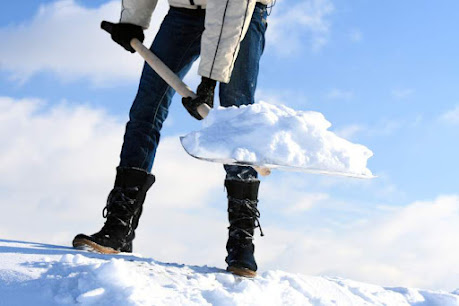


·        Stand with stability: Stand with your feet at hip-width apart to maintain your balance. It’s also best to wear boots that are non-slip when you shovel. This will help protect you from sliding when shovelling.


·        Keep the weight close to your body: Hold the shovel close to your body to guard against straining or pulling a muscle. When the snow is deep, try to shovel smaller amounts (3–5 centimetres/1–2 inches) of snow at a time.


·        Grip strategically: Space your hands apart on the handle to increase your leverage when lifting the snow.


·        Lift with your legs: Bend from your knees, not your back, when lifting. Not only does it protect your back, but you can strengthen your legs as well!


·        Engage your core: Tighten your stomach muscles when lifting snow. This helps to protect your back as you lift.


·        Don’t twist: Avoid twisting your body when you lift. Move your feet instead to turn your body.


·        Don’t fling the snow: Make sure to walk to place the snow on the side of the path rather than throwing it. Turn your feet in the direction you’re dumping the snow—this better positions you to maintain good form. Your whole body will thank you.


Snow shovelling can be a very strenuous activity, and even more so without the correct, protective form. Ask one of our Chiropractor more tips on improving your strength and stability.


With the proper preparation, tools, and technique you can make shovelling safer for you, and your walkways safer for your family, friends, and neighbours.


Happy shovelling!


Friday, February 5, 2021

Shovel Light

Snow piling up? We have some chiropractor-approved tips to help you shovel the right way this winter.

Warm Up
Before tackling any strenuous activity, a quick 10-minute warm up such as a walk around the block will kickstart your muscles for the activity ahead and help prevent injury.

1. Don’t Let Snow Pile Up ❄
If the weather report calls for several days of snow, frequent shovelling will allow you to move smaller amounts of snow after each snowfall.

2. Pick the Right Shovel
Use a lightweight push shovel. If you’re using a metal shovel, spray it with Teflon, so snow won’t stick to it.
3. Push, Don’t Throw 🌨
Push the snow to the side rather than throwing it. This way, you avoid lifting heavy shovelfuls of snow, and abrupt twists or turns that may result in injury.

4. Bend Your Knees
If you need to lift shovelfuls of snow, bend your knees, and use your leg and arm muscles to do the work, while keeping your back straight.

5. Take a Break
If you feel tired or short of breath, stop and take a break. Shake out your arms and legs to recharge.


Keep Comfort in Mind 🧥
Layer your clothing so you can adapt to changing temperatures. If you become too warm while outdoors, simply remove a layer or two to maximize comfort.

Stay Hydrated 💧
Even though it’s cold outside, your body still needs plenty of fluids. Be sure to drink lots of water or fruit juice before, during and after shovelling. Remember – if you feel thirsty, you are already dehydrated.

Take it Slow 🐢
Rest when you feel tired or short of breath. Stop shovelling if you experience sudden or prolonged joint or muscle pain.

Cool Down 🚶‍♀️
After you’ve finished shovelling, cool down by taking a walk and stretching out tense muscles.

#winter #snow #shovelling #ice #backhealth #newhamburgchiropractic #newhamburgmassage #newhamburgphysiotherapy #newhamburgwellness #chiropractic #massage #physiotherapy #rehabilitativeexercise #wecanhelp #recordreaderaward2020 #newpatientswelcome #newhamburg #wilmot

Thursday, February 20, 2020

Protecting Your Back During The Winter Season


By Dr. John A. Papa, DC, FCCPOR(C)


The winter season is upon us and extra precaution must be taken as snow removal and icy walking surfaces can contribute to an increased risk of back injuries.  Included below are some useful tips that can be followed to help keep your back healthy and injury free this winter season.

1.   Warm up:  Prepare your body for physical activity by stimulating the joints and muscles, and increasing blood circulation.  Climbing stairs, marching on the spot, or going for a quick walk around the block can serve as excellent warm-up activities in five to ten minutes.  Follow this with some gentle stretches and exercises for the back.

2.    Push, don’t lift:  Push the snow to one side and avoid lifting.  If you must lift, keep the shovel close to your body and avoid twisting and turning by positioning yourself to lift and throw straight at the snow pile.  Be sure to lift slowly and smoothly and do not jerk with your lifts.

3.    Hinge the hips, bend the knees, keep the back straight and brace:  Use your hips, knees, legs and arm muscles to do the pushing and lifting while keeping your back straight.  Maintaining the natural and neutral curves of your back is important, as this is its strongest and most secure position.  Contracting and bracing your abdominal muscles during lifting improves spinal stability and decreases the chance of injury.

4.    Use the right shovel:  Use a lightweight, non-stick, push-style shovel.  Separate your hands as much as possible on the shovel handle for better leverage against the weight of the snow.

5.    Dress for the job:  Wear warm clothing to protect yourself against the elements.  Shoes and boots with solid treads and soles can help minimize the risk of awkward twisting, slips and falls.

6.    Don’t let the snow pile up:  Removing small amounts of snow on a frequent basis is less strenuous in the long run.

7.  Watch the ice:  Caution should be exercised around icy walkways and slippery surfaces.  Intermittent thaws and subsequent freezing can give way to ice build-up under foot increasing the risk of back twisting, slips and falls.  Coarse sand or ice salt can help give your walkways and driveways more traction.

8.    Take a break:  Know your physical limits.  If you feel tired or short of breath, stop and take a rest.  Make a habit to rest for a moment every 10 or 15 minutes during shoveling.  This is especially important if the snow is wet and heavy.  Stop shoveling immediately if you feel chest or back pain.

In the event that you suffer a back injury that does not subside, you should contact a licensed health professional who deals in the diagnosis and treatment of back pain.  For more information, visit www.nhwc.ca.

This article is a basic summary for educational purposes only.  It is not intended, and should not be considered, as a replacement for consultation, diagnosis or treatment by a duly licensed health practitioner.

Tuesday, March 12, 2019

Protecting Your Back During The Winter Season


By Dr. John A. Papa, DC, FCCPOR(C)

The winter season is upon us and extra precaution must be taken as snow removal and icy walking surfaces can contribute to an increased risk of back injuries.  Included below are some useful tips that can be followed to help keep your back healthy and injury free this winter season.

1.    Warm up:  Prepare your body for physical activity by stimulating the joints and muscles, and increasing blood circulation.  Climbing stairs, marching on the spot, or going for a quick walk around the block can serve as excellent warm-up activities in five to ten minutes.  Follow this with some gentle stretches and exercises for the back.

2.    Push, don’t lift:  Push the snow to one side and avoid lifting.  If you must lift, keep the shovel close to your body and avoid twisting and turning by positioning yourself to lift and throw straight at the snow pile.  Be sure to lift slowly and smoothly and do not jerk with your lifts.

3.    Hinge the hips, bend the knees, keep the back straight and brace:  Use your hips, knees, legs and arm muscles to do the pushing and lifting while keeping your back straight.  Maintaining the natural and neutral curves of your back is important, as this is its strongest and most secure position.  Contracting and bracing your abdominal muscles during lifting improves spinal stability and decreases the chance of injury.

4.    Use the right shovel:  Use a lightweight, non-stick, push-style shovel.  Separate your hands as much as possible on the shovel handle for better leverage against the weight of the snow.

5.    Dress for the job:  Wear warm clothing to protect yourself against the elements.  Shoes and boots with solid treads and soles can help minimize the risk of awkward twisting, slips and falls.

6.    Don’t let the snow pile up:  Removing small amounts of snow on a frequent basis is less strenuous in the long run.
 
7.    Watch the ice:  Caution should be exercised around icy walkways and slippery surfaces.  Intermittent thaws and subsequent freezing can give way to ice build-up under foot increasing the risk of back twisting, slips and falls.  Coarse sand or ice salt can help give your walkways and driveways more traction.

8.    Take a break:  Know your physical limits.  If you feel tired or short of breath, stop and take a rest.  Make a habit to rest for a moment every 10 or 15 minutes during shoveling.  This is especially important if the snow is wet and heavy.  Stop shoveling immediately if you feel chest or back pain.

In the event that you suffer a back injury that does not subside, you should contact a licensed health professional who deals in the diagnosis and treatment of back pain.  For more information, visit www.nhwc.ca.

This article is a basic summary for educational purposes only.  It is not intended, and should not be considered, as a replacement for consultation, diagnosis or treatment by a duly licensed health practitioner.

Wednesday, January 16, 2019

Preventing Cold-Related Injuries During The Winter


By Dr. John A. Papa, DC, FCCPOR(C)


Physical activity during the winter season can place unique demands on the body that can predispose you to injury.  The good news is there are strategies that can be employed to help prevent cold-related injuries.

Below are some of the common injuries that can occur during the winter season:

·     Soft tissue injuries including sprains, strains, and contusions.  Cold weather decreases the elasticity of soft tissues making them more prone to injury during activity.  Ligaments and muscles in the back, upper and lower extremities are commonly injured.  Falls in slippery conditions can also contribute to injury.

·  Exposure injuries include frostbite and hypothermia and occur when individuals do not wear attire that is appropriate for the weather conditions and physical activity performed.

·      Blisters can form due to the friction of wet gloves and/or wet socks with poorly fitting footwear.

·      Sun-related injuries can also occur in the winter months and cause sunburn and snow blindness.

·        Technical injuries can happen when physical activities are performed with:  inadequate technique/training; unsuitable equipment; and/or poor preparation/planning.

Below are some of the strategies that can be used to prevent cold-related injuries:

·     Warm up and prepare your body for physical activity by stimulating the joints and muscles, and increasing blood circulation.  Also consider exercise training to help prepare you for winter activity.

·  Dress for the elements by wearing insulated lightweight clothing with multiple layers.  This will allow you to add or subtract layers as needed.  Attire that is waterproof can help keep you dry and reduce the risk of heat loss.  Insulated gloves, footwear, and headgear can also help keep you warm.  Shoes and boots with solid treads and soles can help minimize the risk of awkward twisting, slips and falls.

·       Protect yourself from the sun by applying sunscreen regularly.  Your eyes should also be protected with UV blocking sunglasses.

·    Use safe snow shoveling techniques.  Get professional training and advice while learning the skills of a particular activity such as skiing or snowboarding to help minimize the chance of injury.

·     Equipment considerations may include using an ergonomic snow shovel, having sporting equipment properly fitted for your body type, or wearing a helmet during activities.

·       Preparation is critical.  For example, be aware of changes in weather forecasts that can influence safety.  Intermittent thaws and subsequent freezing can give way to ice build-up under foot increasing the risk of back twisting, slips and falls.  Coarse sand or ice salt can help give your walkways and driveways more traction.  Planning for physical activity is also important.  For instance, adequate nutrition and hydration before, during, and after activity can optimize energy levels and improve overall physical functioning.  This will help reduce fatigue and chance of injury.

Recognizing some of the common injuries that occur during the winter months and knowing which precautions to take can ensure that you enjoy physical activities safely in cold weather.  For additional information on health and wellness, visit www.nhwc.ca.

This article is a basic summary for educational purposes only.  It is not intended, and should not be considered, as a replacement for consultation, diagnosis or treatment by a duly licensed health practitioner.

Monday, January 22, 2018

Preventing Cold-Related Injuries During The Winter

By Dr. John A. Papa, DC, FCCPOR(C)


Physical activity during the winter season can place unique demands on the body that can predispose you to injury.  The good news is there are strategies that can be employed to help prevent cold-related injuries.

Below are some of the common injuries that can occur during the winter season:

·     Soft tissue injuries including sprains, strains, and contusions.  Cold weather decreases the elasticity of soft tissues making them more prone to injury during activity.  Ligaments and muscles in the back, upper and lower extremities are commonly injured.  Falls in slippery conditions can also contribute to injury.

·     Exposure injuries include frostbite and hypothermia and occur when individuals do not wear attire that is appropriate for the weather conditions and physical activity performed.

·    Blisters can form due to the friction of wet gloves and/or wet socks with poorly fitting footwear.

·     Sun-related injuries can also occur in the winter months and cause sunburn and snow blindness.

·    Technical injuries can happen when physical activities are performed with:  inadequate technique/training; unsuitable equipment; and/or poor preparation/planning.

Below are some of the strategies that can be used to prevent cold-related injuries:

·   Warm up and prepare your body for physical activity by stimulating the joints and muscles, and increasing blood circulation.  Also consider exercise training to help prepare you for winter activity.

·     Dress for the elements by wearing insulated lightweight clothing with multiple layers.  This will allow you to add or subtract layers as needed.  Attire that is waterproof can help keep you dry and reduce the risk of heat loss.  Insulated gloves, footwear, and headgear can also help keep you warm.  Shoes and boots with solid treads and soles can help minimize the risk of awkward twisting, slips and falls.

·     Protect yourself from the sun by applying sunscreen regularly.  Your eyes should also be protected with UV blocking sunglasses.

·   Use safe snow shoveling techniques.  Get professional training and advice while learning the skills of a particular activity such as skiing or snowboarding to help minimize the chance of injury.

·      Equipment considerations may include using an ergonomic snow shovel, having sporting equipment properly fitted for your body type, or wearing a helmet during activities.

·      Preparation is critical.  For example, be aware of changes in weather forecasts that can influence safety.  Intermittent thaws and subsequent freezing can give way to ice build-up under foot increasing the risk of back twisting, slips and falls.  Coarse sand or ice salt can help give your walkways and driveways more traction.  Planning for physical activity is also important.  For instance, adequate nutrition and hydration before, during, and after activity can optimize energy levels and improve overall physical functioning.  This will help reduce fatigue and chance of injury.

Recognizing some of the common injuries that occur during the winter months and knowing which precautions to take can ensure that you enjoy physical activities safely in cold weather.  For additional information on health and wellness, visit www.nhwc.ca.

This article is a basic summary for educational purposes only.  It is not intended, and should not be considered, as a replacement for consultation, diagnosis or treatment by a duly licensed health practitioner.

Wednesday, December 27, 2017

Protecting Your Back During The Winter Season

By Dr. John A. Papa, DC, FCCPOR(C)
 
The winter season is upon us and extra precaution must be taken as snow removal and icy walking surfaces can contribute to an increased risk of back injuries.  Included below are some useful tips that can be followed to help keep your back healthy and injury free this winter season.
 
1.    Warm up:  Prepare your body for physical activity by stimulating the joints and muscles, and increasing blood circulation.  Climbing stairs, marching on the spot, or going for a quick walk around the block can serve as excellent warm-up activities in five to ten minutes.  Follow this with some gentle stretches and exercises for the back.
 
2.    Push, don’t lift:  Push the snow to one side and avoid lifting.  If you must lift, keep the shovel close to your body and avoid twisting and turning by positioning yourself to lift and throw straight at the snow pile.  Be sure to lift slowly and smoothly and do not jerk with your lifts.
 
3.    Hinge the hips, bend the knees, keep the back straight and brace:  Use your hips, knees, legs and arm muscles to do the pushing and lifting while keeping your back straight.  Maintaining the natural and neutral curves of your back is important, as this is its strongest and most secure position.  Contracting and bracing your abdominal muscles during lifting improves spinal stability and decreases the chance of injury.
 
4.    Use the right shovel:  Use a lightweight, non-stick, push-style shovel.  Separate your hands as much as possible on the shovel handle for better leverage against the weight of the snow.
 
5.    Dress for the job:  Wear warm clothing to protect yourself against the elements.  Shoes and boots with solid treads and soles can help minimize the risk of awkward twisting, slips and falls.
 
6.    Don’t let the snow pile up:  Removing small amounts of snow on a frequent basis is less strenuous in the long run.
 
7.    Watch the ice:  Caution should be exercised around icy walkways and slippery surfaces.  Intermittent thaws and subsequent freezing can give way to ice build-up under foot increasing the risk of back twisting, slips and falls.  Coarse sand or ice salt can help give your walkways and driveways more traction.
 
8.    Take a break:  Know your physical limits.  If you feel tired or short of breath, stop and take a rest.  Make a habit to rest for a moment every 10 or 15 minutes during shoveling.  This is especially important if the snow is wet and heavy.  Stop shoveling immediately if you feel chest or back pain.
 
In the event that you suffer a back injury that does not subside, you should contact a licensed health professional who deals in the diagnosis and treatment of back pain.  For more information, visit www.nhwc.ca.
 
This article is a basic summary for educational purposes only.  It is not intended, and should not be considered, as a replacement for consultation, diagnosis or treatment by a duly licensed health practitioner.